

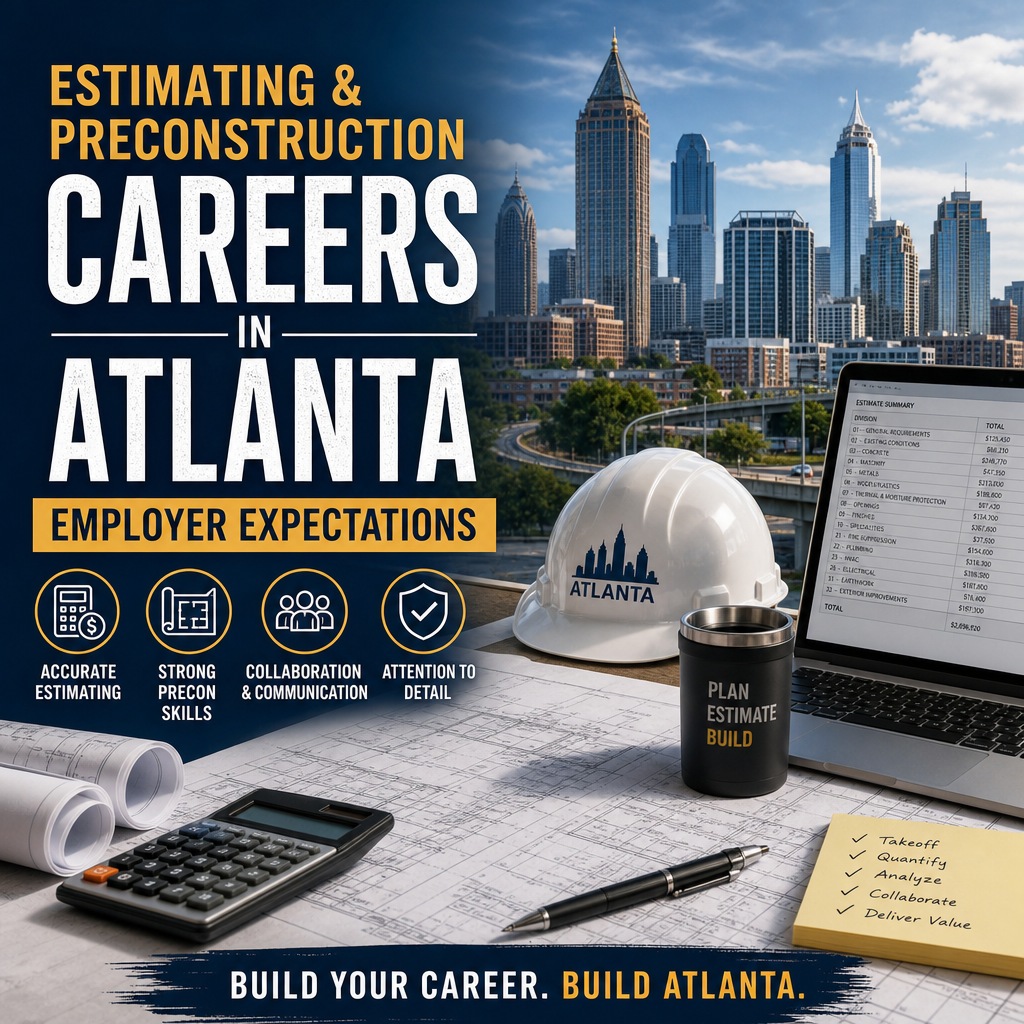
Estimating and Preconstruction Careers in Atlanta: Employer Expectations
Estimating & Preconstruction Careers in Atlanta: What Employers Look For
Atlanta’s construction market is busy, competitive, and full of opportunity. From commercial towers and mixed-use developments to healthcare, multifamily, and infrastructure projects, the city continues to attract major investment. That makes estimating and preconstruction careers in Atlanta especially valuable for professionals who can help projects start on time, on budget, and with fewer surprises.
If you are exploring this path, it helps to understand what employers actually want. While every company has its own hiring style, there are several skills and traits that consistently stand out.
Why Estimating and Preconstruction Matter
Before a project breaks ground, someone has to define its cost, scope, risks, and schedule assumptions. That is where estimating and preconstruction teams come in.
These professionals help answer questions like:
- How much will the project cost?
- What materials and labor are needed?
- What risks could affect the budget?
- Are there faster or more efficient ways to build it?
- Can the project be delivered within the owner’s goals?
In a fast-growing market like Atlanta, strong preconstruction work can be the difference between winning a job and losing it. Employers want people who can think both analytically and practically.
Core Skills Employers Look For
1. Strong Analytical Thinking
At the heart of estimating is the ability to analyze project details and turn them into accurate numbers. Employers look for candidates who can review drawings, specifications, scopes, and bid documents with care.
This means spotting inconsistencies, identifying missing information, and understanding how small changes can affect cost. A good estimator does not just add numbers together. They evaluate risk, compare options, and build a realistic picture of the project.
2. Attention to Detail
Preconstruction work leaves little room for guesswork. A missed line item or incorrect quantity can lead to expensive errors later.
Hiring managers want people who are organized, methodical, and precise. They notice when a candidate can:
- Catch scope gaps
- Read plans carefully
- Track revisions
- Document assumptions clearly
- Keep bid packages organized
These details matter because owners, general contractors, and subcontractors all depend on accurate early-stage information.
3. Construction Knowledge
You do not need to know everything on day one, but employers do expect a solid understanding of how construction works. That includes familiarity with:
- Trade sequencing
- Materials and systems
- General site conditions
- Labor productivity
- Subcontractor scopes
- Constructability concerns
In Atlanta’s market, employers often value people who can connect estimating to field realities. If you understand how a building actually gets built, your estimates and recommendations become more useful.
4. Communication Skills
Estimating and preconstruction are highly collaborative. These roles involve constant communication with owners, architects, engineers, project managers, field teams, and subcontractors.
Employers look for candidates who can explain numbers clearly and confidently. You may need to present budget updates, ask clarifying questions, or negotiate scope differences. Good communication also means listening well, especially when project goals shift.
A strong candidate can translate technical details into plain language that clients and team members can understand.
5. Technology Proficiency
Construction technology continues to shape preconstruction workflows. In Atlanta, many employers want candidates who are comfortable with digital tools used for takeoffs, estimating, scheduling, and document control.
Depending on the company, this may include:
- Estimating software
- Bluebeam or similar markup tools
- Excel
- BIM-related platforms
- Project management systems
- Cloud-based collaboration tools
You do not need to be a software expert for every tool, but employers appreciate candidates who learn quickly and adapt to new systems.
The Experience That Helps Most
Many employers in Atlanta prefer candidates with some combination of field experience, estimating exposure, or preconstruction support work. Even if your background is not strictly in estimating, related experience can still count.
Helpful experience often includes:
- Working for a general contractor or subcontractor
- Assisting with quantity takeoffs
- Supporting bid preparation
- Reviewing drawings and specifications
- Helping with procurement or material tracking
- Field experience in a trade or project coordination role
People with hands-on construction backgrounds often bring a practical perspective that employers value. They can better understand how estimates align with real jobsite conditions.
Traits That Set Candidates Apart
Technical skills are important, but employers also look for character and professionalism. In many cases, these traits separate good candidates from great ones.
Reliability
Preconstruction deadlines are critical. Employers want people who meet deadlines, follow through, and keep work moving.
Curiosity
The best estimators ask questions. They want to understand how systems fit together and why certain approaches work better than others.
Problem-Solving Ability
Projects rarely unfold exactly as planned. Employers appreciate candidates who can evaluate options and make sound decisions under pressure.
Team Mindset
Preconstruction is not a solo job. Strong candidates work well across departments and are open to feedback.
How to Strengthen Your Chances
If you are trying to break into or advance in estimating and preconstruction careers in Atlanta, focus on building both technical and professional credibility.
A few practical steps can help:
- Learn how to read construction drawings and specifications.
- Practice quantity takeoffs and cost comparisons.
- Become comfortable with Excel and estimating software.
- Gain field exposure whenever possible.
- Build a portfolio of projects, even if they are school or internship examples.
- Network with contractors, developers, and industry groups in Atlanta.
Certifications, construction management education, and internship experience can also help, especially for candidates early in their careers.
Final Thoughts
Employers in Atlanta are looking for more than someone who can produce numbers. They want professionals who can think critically, communicate clearly, and understand how early project decisions affect the entire build.
If you are pursuing estimating and preconstruction careers in Atlanta, focus on developing accuracy, construction knowledge, and collaboration skills. In a city where development continues to grow, those strengths can open the door to a rewarding and stable career path.
