
The Future of BIM in Atlanta: Autodesk Construction Cloud, Revit, Navisworks
The Future of BIM in Atlanta: Autodesk Construction Cloud, Revit & Navisworks Explained
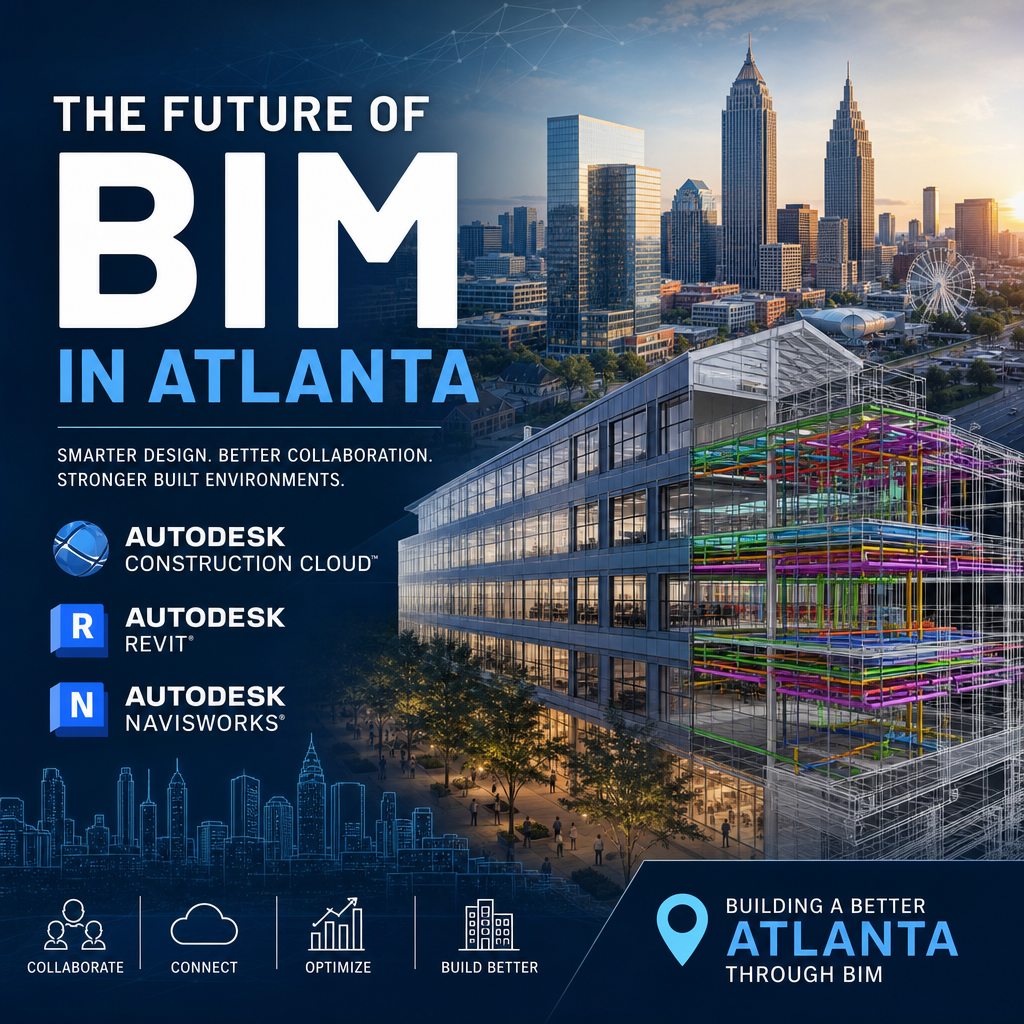
Building information modeling is changing how projects are planned, coordinated, and delivered across Atlanta. From high-rise developments in Midtown to infrastructure upgrades throughout the metro area, teams are under pressure to work faster, reduce rework, and keep everyone aligned. That is where The Future of BIM in Atlanta: Autodesk Construction Cloud, Revit & Navisworks Explained becomes more than a topic—it becomes a roadmap for how modern construction teams can stay competitive.
As projects grow more complex, BIM is no longer just a 3D modeling tool. It is a connected workflow that brings design, coordination, construction, and handover into one ecosystem.
Why BIM Matters More Than Ever in Atlanta
Atlanta’s construction market is busy and diverse. Commercial offices, healthcare campuses, mixed-use developments, transportation projects, and educational facilities all demand precise coordination. With so many stakeholders involved, mistakes can be expensive.

BIM helps teams:
- Improve collaboration between architects, engineers, and contractors
- Detect conflicts before construction begins
- Keep drawings and models updated in real time
- Reduce costly change orders and delays
- Support better project visibility from planning through closeout
For Atlanta firms, the future of BIM is about smarter workflows, not just better models.
Autodesk Construction Cloud: The Connected Project Hub
At the center of this shift is Autodesk Construction Cloud. It serves as a digital platform that connects teams, models, documents, and data throughout the project lifecycle. Instead of working in isolated systems, stakeholders can access the same information in one place.
What it brings to BIM workflows
Autodesk Construction Cloud helps teams:
- Store and manage project files in a centralized environment
- Track issues and RFIs more efficiently
- Improve coordination between office and field teams
- Share model updates without version confusion
- Maintain visibility across design and construction phases
Its strength lies in connection. When project information is accessible and organized, teams spend less time searching for files and more time making decisions.
Why it matters in Atlanta
Atlanta projects often involve multiple firms, fast schedules, and changing site conditions. Autodesk Construction Cloud supports collaboration across those moving parts, making it easier to keep BIM data usable from one phase to the next.
Revit: The Foundation of BIM Design
If Autodesk Construction Cloud is the hub, Revit is one of the core engines driving BIM design. Revit allows architects, engineers, and designers to create intelligent 3D models with embedded data. These models are more than visual representations—they carry information about walls, systems, components, and relationships.
Key benefits of Revit
Revit supports:
- Coordinated architectural, structural, and MEP design
- Parametric modeling that updates automatically when changes are made
- Accurate documentation from the model itself
- Better consistency across drawings and schedules
- Faster design iteration and fewer manual updates
Because Revit links model elements to data, changes in one view can update everywhere else. That reduces duplication and helps teams maintain accuracy.
Revit’s role in the future of BIM
In Atlanta’s fast-paced market, Revit helps teams design with flexibility and confidence. As projects become more integrated, Revit will continue to be the backbone of detailed BIM authoring and design coordination.
Navisworks: The Coordination and Clash Detection Tool
While Revit is powerful for modeling, Navisworks is essential for coordination. It brings together models from different disciplines and allows teams to review the project as a whole. This is especially useful when multiple consultants are contributing separate models.
What Navisworks does well
Navisworks is commonly used for:
- Clash detection between systems
- Model review and coordination meetings
- Construction sequencing and 4D planning
- Combining multiple file types into one review environment
- Identifying problems before they reach the jobsite
This makes it a valuable tool for reducing surprises during construction. Instead of discovering issues in the field, teams can resolve them during the design or preconstruction phase.
Why Atlanta teams rely on it
In a city where project schedules are tight and coordination is critical, Navisworks helps prevent delays caused by conflicting systems or design gaps. For contractors and trade partners, it provides a clearer view of how the project will actually come together.
How These Tools Work Together
The real power of BIM comes from integration. Revit creates the detailed model. Navisworks checks it for coordination issues. Autodesk Construction Cloud keeps the entire process connected and accessible.
Together, they support a smoother workflow:
- Design teams build models in Revit
- Coordination teams review combined models in Navisworks
- Project stakeholders track documents and issues in Autodesk Construction Cloud
- Field teams stay updated with the latest information
- The project moves forward with fewer errors and better communication
This connected approach is what makes the future of BIM in Atlanta so promising.
What Atlanta Firms Should Expect Next
The next phase of BIM will likely focus on even greater integration, automation, and data-driven decision-making. Teams will expect models to do more than represent buildings. They will need to support scheduling, cost tracking, field execution, and lifecycle management.
Key trends include:
- Greater cloud collaboration
- More model-based decision-making
- Improved coordination between office and field
- Increased use of digital twins and asset data
- Smarter workflows powered by automation
For Atlanta builders, designers, and developers, adopting these tools now can create a strong advantage later.
Conclusion
The future of BIM in Atlanta is built on connected tools and smarter collaboration. Autodesk Construction Cloud, Revit, and Navisworks each play a different role, but together they create a more efficient, accurate, and coordinated project environment. As Atlanta continues to grow, firms that embrace these BIM technologies will be better prepared to deliver complex projects with confidence.
