
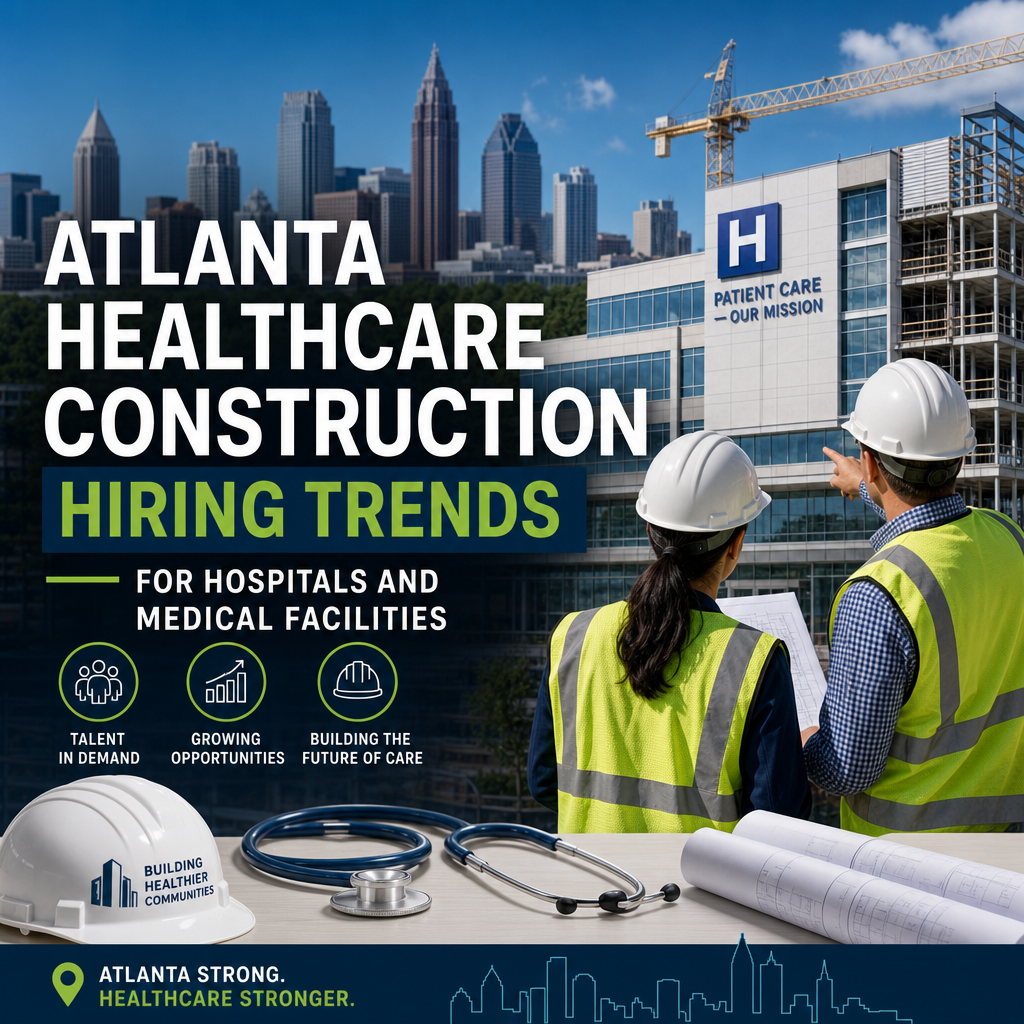
Atlanta Healthcare Construction Hiring Trends for Hospitals and Medical Facilities
Atlanta Healthcare Construction: Hiring Trends for Hospitals, Clinics & Medical Facilities
Atlanta healthcare construction is growing fast as hospitals, outpatient centers, urgent care clinics, and specialty medical facilities expand to meet rising demand. From new patient towers to renovated exam rooms and surgical suites, the region’s healthcare real estate market is creating steady work for builders, subcontractors, and project teams.
At the same time, hiring trends are shifting. Healthcare projects are more complex than standard commercial builds, and owners want contractors who can manage tight schedules, strict regulations, and active job sites with minimal disruption to patient care. That means the talent market is changing along with the work itself.
Why Healthcare Construction Is Growing in Atlanta
Atlanta continues to attract major healthcare investment because of population growth, regional medical hubs, and an increasing need for modern facilities. Hospitals and private practices alike are upgrading spaces to improve patient experience, add advanced equipment, and expand service lines.
Several factors are fueling this growth:
- Population growth across metro Atlanta
- Increased demand for outpatient and ambulatory care
- Aging healthcare facilities needing modernization
- Expansion of specialty services, imaging, and surgical centers
- Continued investment in health systems and academic medical centers
These projects are often phased, highly technical, and schedule-sensitive. As a result, the demand for skilled construction professionals remains strong.
Roles in High Demand
Hiring trends in Atlanta healthcare construction point to a need for workers who can combine general building expertise with knowledge of healthcare environments. Employers are looking for people who understand infection control, patient safety, and the operational needs of active medical facilities.
Project Management Talent
Project managers and superintendents are especially valuable when they have experience with occupied healthcare buildings. They must coordinate multiple trades, manage clinical stakeholders, and keep work moving without interrupting patient services.
Key skills in demand include:
- Healthcare construction phasing
- Budget and schedule control
- Coordination with architects and consultants
- Understanding of regulatory requirements
- Strong communication with hospital administrators
Skilled Trade Labor
Labor shortages remain a challenge, especially for experienced tradespeople who can work in complex environments. Electrical, mechanical, plumbing, and finish trades are all essential in healthcare construction.
In particular, employers are seeking:
- Licensed electricians
- HVAC technicians
- Plumbers with medical gas experience
- Fire protection specialists
- Cleanroom and specialty finish installers
Preconstruction and Estimating Professionals
As project planning becomes more detailed, firms are also hiring more preconstruction managers, estimators, and VDC/BIM specialists. These roles help catch issues early, reduce change orders, and improve coordination before construction begins.
What Employers Are Looking For
In Atlanta healthcare construction, technical ability alone is not enough. Employers increasingly value candidates who understand the unique conditions of hospital and clinic work.
Important qualities include:
- Experience in active healthcare settings
- Familiarity with infection control procedures
- Comfort working around patients and clinical staff
- Ability to follow strict safety and cleanliness protocols
- Flexibility to work in phased or off-hour schedules
Teams that can work nights, weekends, or in carefully sequenced shifts are often more competitive. Many healthcare projects are built while facilities remain open, so minimizing disruption is a top priority.
How Hiring Is Changing
The hiring landscape is becoming more selective and more strategic. General construction experience still matters, but companies now want people with healthcare-specific expertise or a clear ability to adapt quickly.
More Demand for Specialized Experience
Contractors are prioritizing candidates who have worked on:
- Hospitals
- Surgery centers
- Diagnostic imaging suites
- Behavioral health facilities
- Senior care and rehabilitation centers
This experience helps reduce risk and improves project delivery. Owners often prefer teams that already know how to navigate sterile zones, sensitive equipment requirements, and healthcare compliance issues.
Greater Use of Cross-Functional Teams
Many firms are building teams that blend field leadership, preconstruction planning, and technology. Instead of relying only on traditional roles, companies want staff who can collaborate across disciplines and solve problems early.
That may include:
- BIM coordinators working with field supervisors
- Estimators involved in early budgeting
- Project engineers supporting documentation and compliance
- Superintendents coordinating with medical staff and facility managers
Focus on Retention and Training
Because experienced healthcare construction professionals are in high demand, companies are paying more attention to retention. Competitive pay still matters, but so do training, advancement opportunities, and a strong safety culture.
Firms that invest in:
- Mentorship programs
- Healthcare-specific training
- Career development paths
- Better work-life balance where possible
are often better positioned to attract and keep top talent.
Opportunities for Job Seekers
For construction professionals, Atlanta healthcare construction offers a stable and growing career path. The sector tends to be less cyclical than some other commercial markets, and many projects require long-term involvement from planning through closeout.
Job seekers can strengthen their position by gaining experience in:
- Renovation of occupied facilities
- MEP coordination
- Infection control risk assessment
- Healthcare codes and standards
- Commissioning and turnover processes
Certifications and continuing education can also help candidates stand out, especially in roles tied to safety, quality control, and specialty systems.
Looking Ahead
Healthcare construction in Atlanta is expected to remain active as systems expand services, update aging infrastructure, and respond to changing patient needs. That means hiring will continue to favor adaptable professionals who can handle technical complexity and work collaboratively in sensitive environments.
For contractors and job seekers alike, the message is clear: success in this market depends on specialized knowledge, reliable execution, and a strong understanding of what healthcare facilities require.
As demand grows, so will the need for teams that can deliver safe, efficient, and patient-centered spaces across the Atlanta region.