

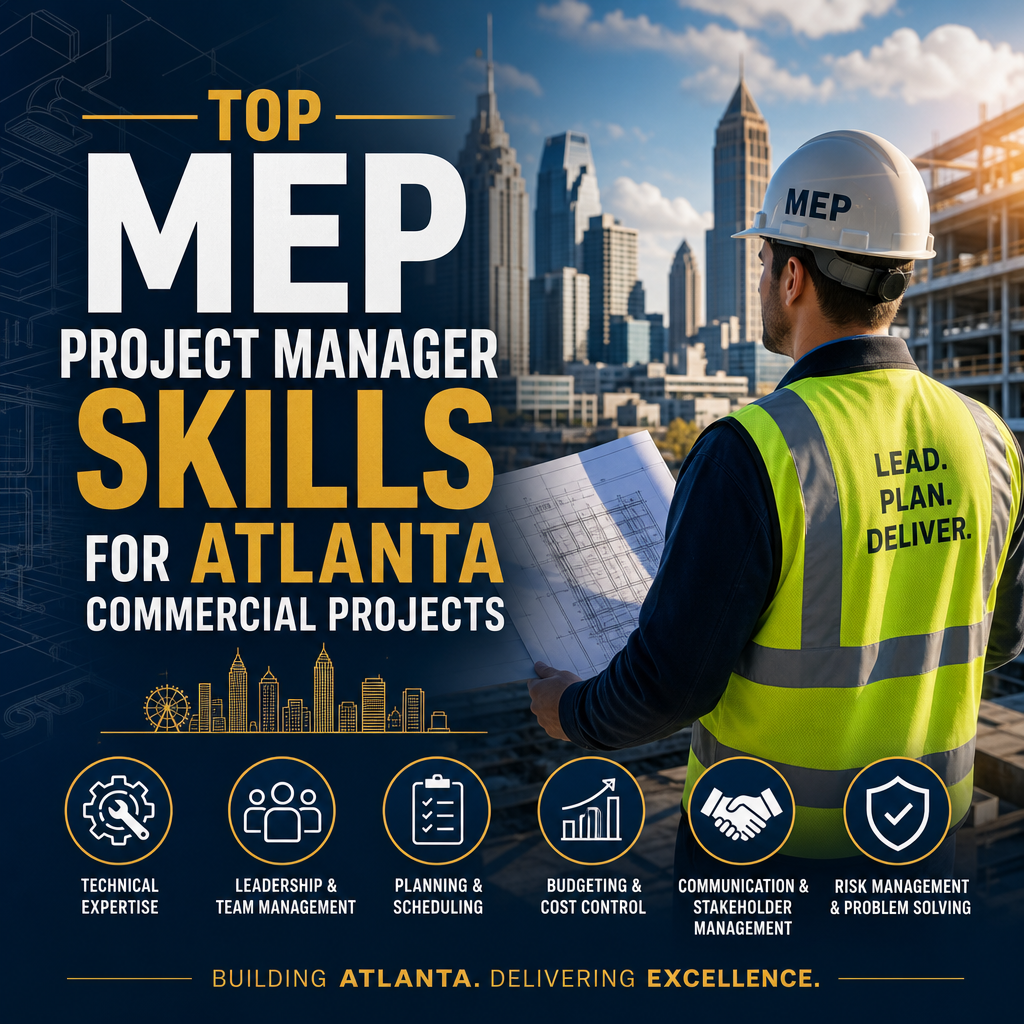
Top MEP Project Manager Skills for Atlanta Commercial Projects
Top MEP Project Manager Skills Needed for Atlanta’s Complex Commercial Projects
Atlanta’s commercial construction market continues to grow, with new office towers, mixed-use developments, healthcare facilities, and large-scale retail spaces reshaping the city skyline. These projects are complex by nature, and they demand leaders who can keep mechanical, electrical, and plumbing systems aligned from planning through closeout. That is where strong MEP project manager skills make the difference.
MEP systems are often the backbone of a commercial building. They affect comfort, safety, energy use, and long-term performance. In a fast-moving market like Atlanta, project managers must do more than track schedules. They must coordinate teams, solve problems quickly, and keep technical details under control across many moving parts.
Why MEP Project Managers Matter in Atlanta
Commercial projects in Atlanta often involve tight urban sites, aggressive timelines, and a mix of stakeholders. Owners, architects, engineers, contractors, and inspectors all need clear communication. MEP project managers help connect those groups and ensure every system works as intended.

Without the right leadership, projects can face costly delays, change orders, rework, and compliance issues. With the right manager, however, complex systems can be delivered efficiently and with fewer surprises.
Technical Knowledge Is the Foundation
One of the most important MEP project manager skills is a strong understanding of mechanical, electrical, and plumbing systems. A project manager does not need to design every system, but they must understand how those systems interact.
This includes knowledge of:
- HVAC equipment and distribution
- Electrical load requirements and power coordination
- Plumbing, drainage, and fire protection systems
- Building automation and controls
- Energy efficiency and commissioning requirements
In Atlanta’s commercial projects, technical knowledge helps a manager catch conflicts early. For example, if ductwork, conduit, and piping all compete for the same ceiling space, the manager must identify the issue before installation becomes expensive.
Communication Keeps Teams Aligned
Commercial projects involve many stakeholders, and communication can easily break down without a clear leader. A skilled MEP project manager knows how to communicate technical information in a way that everyone can understand.

This means:
- Running effective coordination meetings
- Sharing updates with owners and general contractors
- Tracking RFIs, submittals, and revisions
- Keeping field teams informed about scope changes
- Resolving issues before they become delays
Good communication also builds trust. When project teams know they will receive timely, accurate information, they can work faster and with fewer mistakes.
Scheduling and Coordination Are Critical
On a complex project, timing is everything. MEP work often depends on structural progress, architectural completion, and equipment delivery. If one phase slips, the whole schedule can be affected.
Strong MEP project manager skills include the ability to build realistic schedules and adjust them as conditions change. This requires close coordination with procurement teams, subcontractors, and site supervisors.
A good manager will:
- Plan long-lead equipment purchases early
- Coordinate installation sequences with other trades
- Monitor milestones and critical path items
- Anticipate delays before they impact turnover
- Keep commissioning and inspection dates on track
In a busy market like Atlanta, this level of organization helps prevent bottlenecks and keeps projects moving.
Problem-Solving Under Pressure
No commercial project goes exactly as planned. Material shortages, design revisions, weather delays, and field conflicts all create pressure. The best MEP project managers stay calm and focus on solutions.
Problem-solving requires both technical judgment and practical thinking. A manager may need to decide whether to resequence work, request a design clarification, or coordinate a field adjustment that avoids rework. The goal is always to protect the project schedule, budget, and quality.
This skill is especially valuable on occupied renovations or fast-track developments, where there is little room for error.
Budget Awareness Protects Project Profitability
Commercial MEP systems can represent a major portion of a project budget. That means managers must keep a close eye on costs from the start.
Budget awareness includes:
- Reviewing estimates carefully
- Tracking labor and material costs
- Managing change orders
- Reducing waste and rework
- Comparing actual spending against projections
In Atlanta’s competitive construction environment, cost control is essential. A project manager who understands financial impacts can help teams make smarter decisions and protect the owner’s investment.
Leadership Builds Accountability
Great project managers do not just supervise tasks. They lead people. On complex commercial jobs, leadership means setting expectations, holding teams accountable, and keeping everyone focused on the same goal.
Effective leadership looks like this:
- Setting clear priorities
- Delegating responsibilities effectively
- Following up on outstanding items
- Encouraging collaboration between trades
- Maintaining a professional, solution-oriented attitude
When a manager leads with confidence, the entire project team performs better. This is especially important on high-pressure Atlanta builds where deadlines are tight and coordination must be precise.
Attention to Detail Prevents Costly Mistakes
MEP systems involve countless details, from equipment dimensions to clearance requirements to permit documentation. Missing even a small item can create major problems later.
A detail-oriented manager checks drawings, reviews specifications, and verifies that work in the field matches the plan. This careful oversight helps reduce delays during inspections, testing, and final turnover.
It also supports quality assurance, which is critical for buildings that must perform reliably from day one.
Conclusion
Atlanta’s commercial construction landscape demands leaders who can handle complexity with skill and confidence. The most successful MEP project manager skills combine technical knowledge, communication, scheduling, problem-solving, budget control, leadership, and attention to detail.
When these skills come together, MEP systems are delivered more smoothly, projects stay on track, and buildings are better prepared to serve their owners and occupants for years to come.
