
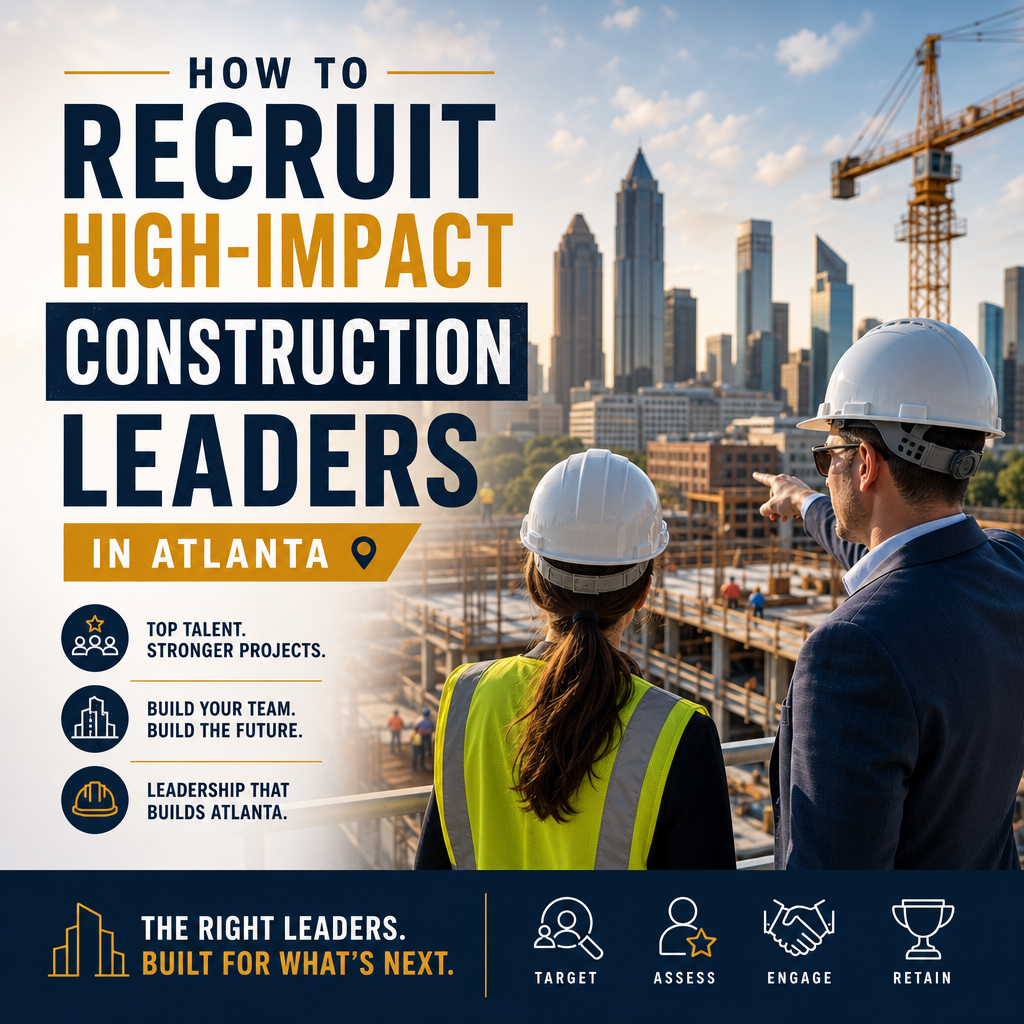
How to Recruit High-Impact Construction Leaders in Atlanta
How to Recruit High-Impact Construction Leaders in a Competitive Atlanta Market
Atlanta’s construction market is booming, but so is the competition for experienced leadership. As major commercial, infrastructure, and mixed-use projects continue to reshape the city, companies need more than skilled labor—they need construction leaders who can drive schedules, manage budgets, and inspire teams to deliver quality work under pressure.
Recruiting these leaders is not simple. The best candidates often have multiple offers, and many are already employed on successful projects. To win top talent, firms need a clear strategy, a strong employer brand, and a hiring process built for speed and credibility.
Why Leadership Hiring Is Especially Challenging in Atlanta
Atlanta has become one of the Southeast’s most active construction markets. That creates opportunity, but it also raises the stakes for hiring.

High-performing superintendents, project managers, estimators, and construction executives are in demand across:
- Commercial real estate
- Healthcare and education
- Logistics and industrial development
- Infrastructure and transportation
- Multifamily and mixed-use projects
Because of this demand, candidates can be selective. They are looking not only for compensation, but also for stability, project variety, advancement, and leadership support. Companies that fail to communicate these strengths quickly lose out.
Define the Leader You Actually Need
Before starting a search, clarify the role in practical terms. “Construction leader” can mean many things, and vague job descriptions tend to attract the wrong people.
Ask:
- What projects will this person oversee?
- What size teams will they manage?
- Will they be client-facing?
- Are they expected to improve margin, safety, schedule performance, or all three?
- Is this a hands-on field leadership role or a strategic management position?
The more precise the profile, the easier it is to evaluate candidates and position the opportunity accurately. A strong job description should describe the real challenge, not just a list of responsibilities.
Build a Strong Employer Value Proposition
In a competitive market, compensation matters—but it is rarely the only factor. High-impact construction leaders want to know why they should join your company instead of another one.
Your employer value proposition should answer questions like:
- What types of projects will they help shape?
- How much autonomy will they have?
- What is the company’s growth path?
- How does the firm support safety, technology, and professional development?
- What makes your culture different from competitors?
For many candidates, the best opportunities combine meaningful work with a clear path to influence. If your company has a reputation for collaborative leadership, long-term client relationships, or strong internal promotion, make that visible early.
Use Targeted Sourcing, Not Broad Posting
Posting a job online is not enough to recruit high-impact construction leaders in Atlanta. The strongest candidates are often passive, meaning they are not actively applying to roles.
To reach them, use a more focused approach:
Tap into industry networks
Trade associations, local builder groups, alumni connections, and subcontractor relationships can all uncover hidden talent.
Engage recruiters with construction expertise
A recruiter who understands the Atlanta market can identify candidates who match the technical and cultural needs of the role.
Look at adjacent markets
Some leaders from nearby regions may be open to Atlanta opportunities, especially if the role offers stronger growth or more complex projects.
Reconnect with former employees
Former team members who left on good terms may be the easiest high-quality hires to bring back.
The goal is to meet leaders where they already are, not wait for them to find you.
Move Quickly, But Don’t Rush the Process
Top candidates in construction leadership often receive competing offers fast. A slow hiring process can cost you the best person before you even reach the final round.
That said, speed should not replace structure. A strong process might include:
- A focused initial screening
- A practical interview with project or operations leaders
- A conversation about culture and long-term fit
- Reference and background checks completed efficiently
- A timely, competitive offer
Every step should have a clear purpose. Avoid unnecessary delays, repeated interviews, or unclear decision-making. Candidates interpret slow movement as disorganization.
Sell the Opportunity, Not Just the Job
The best construction leaders are mission-driven. They want to know what they will build, how they will lead, and what impact they can make.
During the interview process, be ready to discuss:
- Major current and upcoming projects
- Company growth plans
- Leadership expectations
- Support resources and reporting structure
- How success will be measured in the first 6 to 12 months
Make the role feel like a real opportunity to lead, not just fill a vacancy. In Atlanta’s market, that distinction matters.
Retention Starts During Recruitment
Hiring a high-impact leader is only half the job. Keeping them begins before they accept the offer.
Set realistic expectations about:
- Workload and schedule demands
- Project complexity
- Team structure
- Decision-making authority
- Compensation and bonus potential
Misalignment in the hiring stage often leads to early turnover. When candidates understand the environment clearly, they are more likely to stay and succeed.
Final Thoughts
Recruiting high-impact construction leaders in Atlanta requires focus, speed, and a strong message. Companies that define the role clearly, highlight what makes them unique, and build a streamlined hiring process have a much better chance of securing top talent.
In a market this competitive, the firms that hire well are the ones that treat leadership recruitment as a strategic priority—not a last-minute task.