
Residential vs. Commercial Construction Careers in Atlanta: Which Pays More?
Residential vs. Commercial Construction Careers in Atlanta: Which Path Pays More?
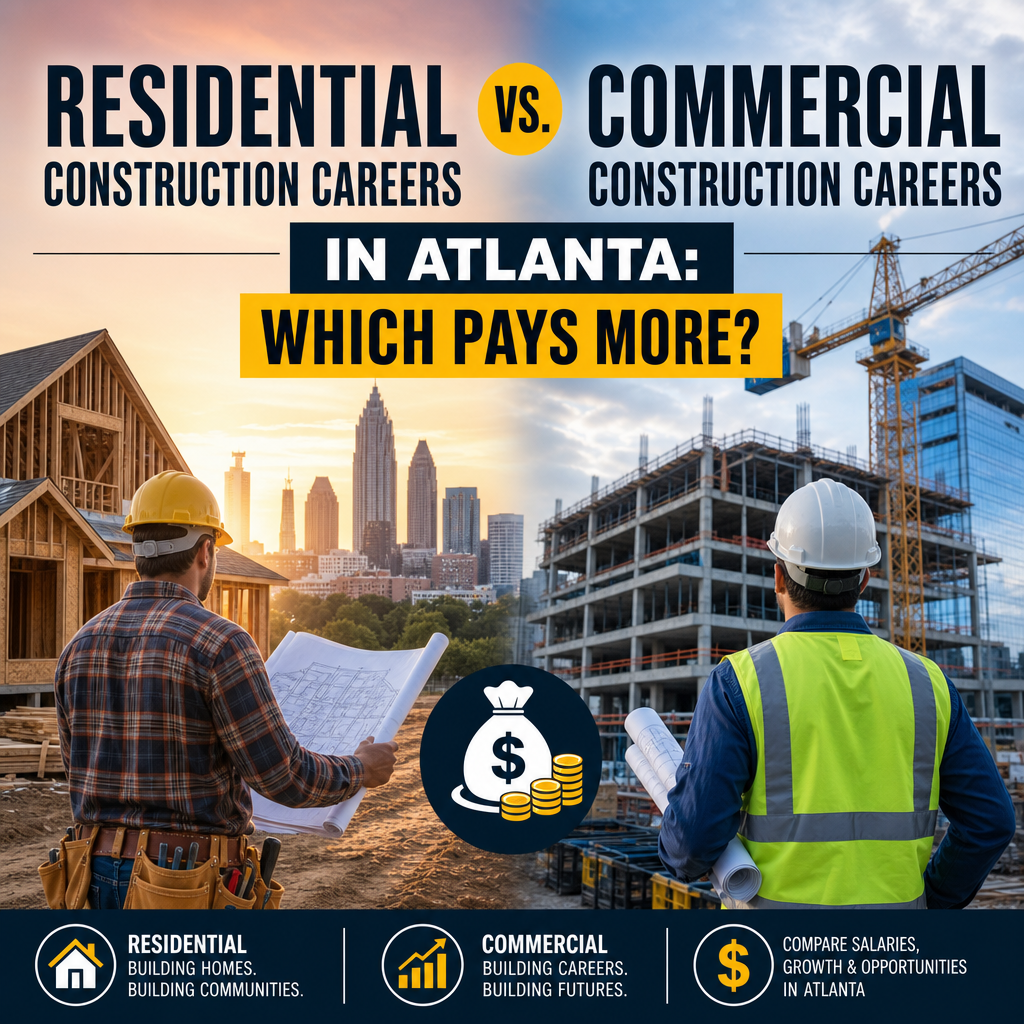
Atlanta’s construction industry keeps growing as the city expands with new neighborhoods, office towers, mixed-use developments, and infrastructure upgrades. For people considering a career in the trades, one question comes up often: residential vs. commercial construction careers in Atlanta— which path pays more?
The short answer is that commercial construction often pays more on average, but residential work can offer faster entry, steadier local demand, and strong earning potential for skilled professionals. The better path depends on your experience, certifications, work style, and long-term goals.
What’s the Difference Between Residential and Commercial Construction?
Before comparing pay, it helps to understand the two fields.

Residential construction
Residential construction focuses on homes and living spaces, such as:
- Single-family houses
- Townhomes
- Apartments
- Condominiums
- Renovations and additions
Workers in this field may handle framing, roofing, plumbing, electrical work, drywall, cabinetry, and finishing.
Commercial construction
Commercial construction covers buildings used for business or public activity, including:
- Office buildings
- Retail stores
- Warehouses
- Schools
- Hospitals
- Hotels
- Industrial facilities
These projects are often larger, more regulated, and more complex than residential jobs. They may also require specialized training and coordination across multiple crews.
Which Path Pays More in Atlanta?
In many cases, commercial construction careers in Atlanta pay more than residential jobs. That’s especially true for skilled trades like electrical, HVAC, plumbing, welding, and project supervision.

Why commercial roles often pay more:
- Larger project budgets
- More technical requirements
- Stricter safety and compliance standards
- Union and prevailing wage opportunities on certain projects
- Greater demand for experienced foremen and supervisors
That said, residential construction pay can still be competitive, particularly for workers who specialize in high-end custom homes, remodeling, or subcontracting. A skilled residential contractor with a strong reputation in Atlanta can earn well above entry-level wages.
Entry-Level Pay: A Closer Look
For newcomers, residential construction can sometimes be easier to break into. Smaller crews may hire apprentices or helpers with less experience, and the learning curve can be more direct.
Residential entry-level workers may start with:
- Basic labor tasks
- Material handling
- Site cleanup
- Assisting skilled tradespeople
Commercial construction may have higher starting wages in some roles, but employers often expect greater readiness, safety awareness, and experience with larger-scale operations. Entry-level workers may need OSHA training, certifications, or prior exposure to commercial job sites.
In Atlanta, the difference in starting pay can vary depending on the company, the trade, and the demand in the market. However, commercial roles usually have a stronger ceiling as workers gain experience.
Long-Term Earning Potential
If the goal is to maximize income over time, commercial construction usually has the edge.
Commercial career advantages
Commercial workers can move into roles such as:
- Lead technician
- Foreman
- Superintendent
- Estimator
- Project manager
These positions often come with better compensation, benefits, and more stable advancement paths. The larger the project, the more valuable experienced team members become.
Residential career advantages
Residential careers can also be profitable, especially for people who build strong client relationships or eventually start their own business. A residential carpenter, remodeler, or contractor in Atlanta can earn more by:
- Taking on custom projects
- Developing a niche
- Working independently
- Managing multiple crews
For many people, residential construction offers a faster route to entrepreneurship, even if commercial jobs offer higher wages earlier in the career.
Work Environment and Lifestyle
Pay is important, but so is the kind of work you want to do every day.
Residential construction work tends to offer:
- Smaller job sites
- More direct interaction with homeowners
- Faster project turnaround
- More variety from house to house
Commercial construction work tends to involve:
- Larger teams
- More structured schedules
- More documentation and safety procedures
- Longer project timelines
Some workers prefer the hands-on, personal nature of residential projects. Others enjoy the scale, organization, and technical challenge of commercial builds. The right environment can affect job satisfaction just as much as pay.
Atlanta Market Trends
Atlanta’s growth fuels both sectors, but commercial construction has benefited from major development in business districts, healthcare, logistics, and multifamily housing. At the same time, residential construction remains strong because of population growth, suburban expansion, and home renovation demand.
This means there is no shortage of opportunity in either path. The Atlanta market supports:
- Skilled residential remodelers
- New home builders
- Commercial electricians and plumbers
- HVAC technicians
- Concrete and framing crews
- Site supervisors and project managers
Workers who are adaptable and willing to learn in-demand skills often have the best chance of increasing their earnings.
How to Choose the Right Path
If you’re deciding between residential and commercial construction careers in Atlanta, consider these questions:
- Do you prefer smaller teams or larger job sites?
- Are you more interested in customer-facing work or technical coordination?
- Do you want faster entry into the field, or higher long-term pay?
- Would you rather work on homes or large-scale buildings?
- Are you open to certifications and advanced training?
If immediate access and flexibility matter most, residential construction may be the better fit. If long-term earning potential and advancement are your priorities, commercial construction is often the stronger choice.
Final Thoughts
When it comes to residential vs. commercial construction careers in Atlanta, commercial work generally pays more, especially for experienced tradespeople and supervisors. Still, residential construction can offer excellent income, especially for skilled workers who specialize, build a client base, or grow into business ownership.
The best path depends on your goals. If you want higher wages and broader advancement opportunities, commercial construction is worth serious consideration. If you want a more direct path into the trades and the chance to build a local reputation, residential construction may be the right starting point.
Either way, Atlanta’s construction industry offers strong opportunities for workers ready to learn, work hard, and grow their skills.