
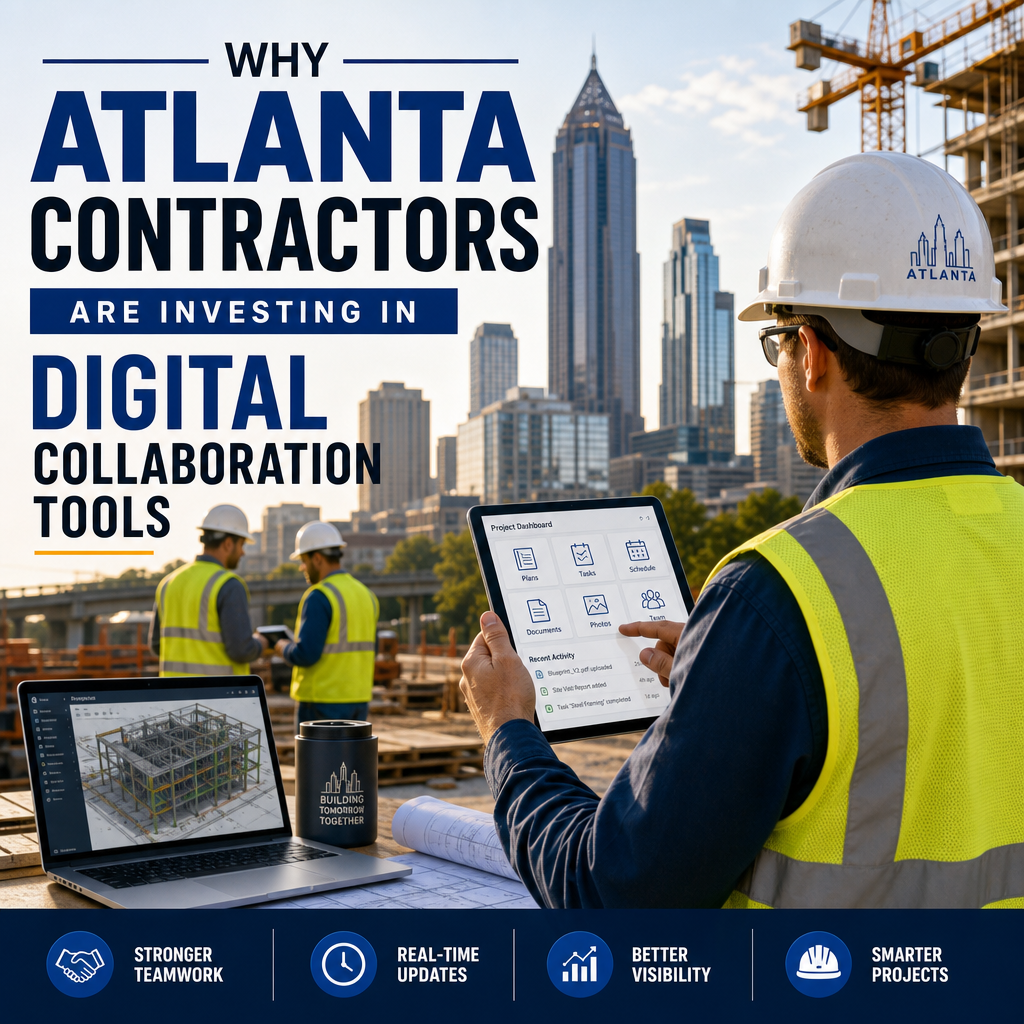
Why Atlanta Contractors Are Investing in Digital Collaboration Tools
Why Atlanta Contractors Are Investing in Digital Collaboration Tools
Construction in Atlanta moves fast. Between new commercial developments, neighborhood renovations, and tight project timelines, contractors need every advantage they can get. That is one reason more firms are turning to digital collaboration tools to keep jobs on track, reduce delays, and improve communication from the office to the field.
For many teams, the shift is no longer optional. It is becoming a practical response to rising client expectations, growing project complexity, and the need to coordinate multiple trades without wasting time.
The Pressure on Atlanta Contractors Is Growing
Atlanta’s construction market is busy and competitive. Contractors are often managing several projects at once, each with different crews, timelines, and stakeholders. Add changing weather, supply chain issues, and labor shortages, and it becomes clear why old methods like paper logs, scattered emails, and phone call updates are not enough.

Digital collaboration tools help contractors centralize information and make decisions faster. Instead of hunting through texts or waiting for someone to return a call, teams can access updated plans, schedules, and task lists in one place.
That kind of access matters when delays can ripple across an entire project.
What Digital Collaboration Tools Actually Do
Digital collaboration tools cover a range of platforms that support communication and project management. For contractors, these tools often include:
- Shared project dashboards
- Cloud-based document storage
- Real-time messaging
- Task assignment and tracking
- Photo and file sharing from the job site
- Scheduling and calendar coordination
- Mobile access for field teams
These tools are designed to connect project managers, subcontractors, suppliers, and field crews. When everyone works from the same information, coordination becomes much easier.
Better Communication Across the Job Site
Miscommunication is one of the most common causes of delays and rework. A drawing update missed by one subcontractor can lead to costly mistakes. A schedule change that never reaches the field can throw off an entire day’s workflow.

With digital collaboration tools, updates can be shared instantly. A project manager can upload revised plans, send a message to the crew, and confirm receipt in minutes. Field teams can also respond quickly with photos, questions, or progress reports.
This kind of real-time communication helps reduce confusion and keeps everyone aligned.
Faster Problem Solving
Every construction project runs into issues. Materials arrive late. Unexpected site conditions appear. Design changes happen mid-project. The difference between a minor setback and a major delay often comes down to how quickly the team responds.
Digital tools make it easier to solve problems on the spot. If a superintendent spots an issue in the field, they can document it with photos, notify the right people, and track the resolution all in one system. Instead of waiting for a chain of emails to move through the office, decisions can happen faster.
That speed can protect both the schedule and the budget.
Why Atlanta Contractors See the Value
Atlanta contractors are investing in digital collaboration tools because the return is tangible. These platforms save time, improve visibility, and reduce the risk of expensive mistakes. They also help firms look more professional and responsive to clients.
1. Improved Project Oversight
When multiple jobs are running at once, it is hard to keep track of every detail manually. Digital dashboards give managers a clearer view of what is happening across projects. They can monitor deadlines, review status updates, and identify bottlenecks before they become bigger problems.
2. Stronger Accountability
Assigning tasks digitally creates a record of who is responsible for what and when it is due. That makes it easier to follow up and less likely that important work gets overlooked. Accountability improves when expectations are visible to the whole team.
3. Easier Access for Field Teams
Construction does not happen behind a desk. Crews need information while standing on the job site, often from a phone or tablet. Digital collaboration tools give workers instant access to the latest plans, notes, and updates without having to call the office every time they need clarification.
4. Better Client Communication
Clients want updates. They want to know how the project is progressing, whether deadlines are shifting, and when key milestones will be completed. Contractors who use digital tools can provide more accurate, timely updates and share progress more easily. That builds trust and improves the client experience.
The Shift from Reactive to Proactive Management
One of the biggest benefits of digital collaboration tools is that they help contractors move from reactive management to proactive management. Instead of waiting for problems to surface, teams can spot risks earlier and respond before they grow.
For example, if a schedule dashboard shows that one trade is falling behind, the project manager can adjust the plan before the delay affects the next phase. If a document is missing or outdated, the team can correct it immediately. That level of visibility creates smoother workflows and fewer surprises.
A Smarter Way to Work
Digital collaboration tools are not just about convenience. They are about building a more efficient, organized, and resilient construction business. In a market like Atlanta, where projects are complex and timelines are tight, that matters.
Contractors who embrace these tools are often better positioned to:
- Reduce rework
- Improve communication
- Keep projects moving
- Strengthen team coordination
- Deliver a better client experience
The Future of Construction Collaboration in Atlanta
As more contractors adopt digital systems, the standard for project communication is rising. Teams that still rely on fragmented communication methods may find it harder to keep up with faster, more connected competitors.
The good news is that digital collaboration tools do not have to replace everything at once. Many contractors start small, using one platform for document sharing or task management, then expand as their teams become comfortable with the process.
For Atlanta contractors, the investment is less about following a trend and more about staying efficient in a demanding industry. The firms that communicate clearly, adapt quickly, and keep everyone aligned are the ones most likely to thrive.
Digital collaboration tools are helping make that possible.