
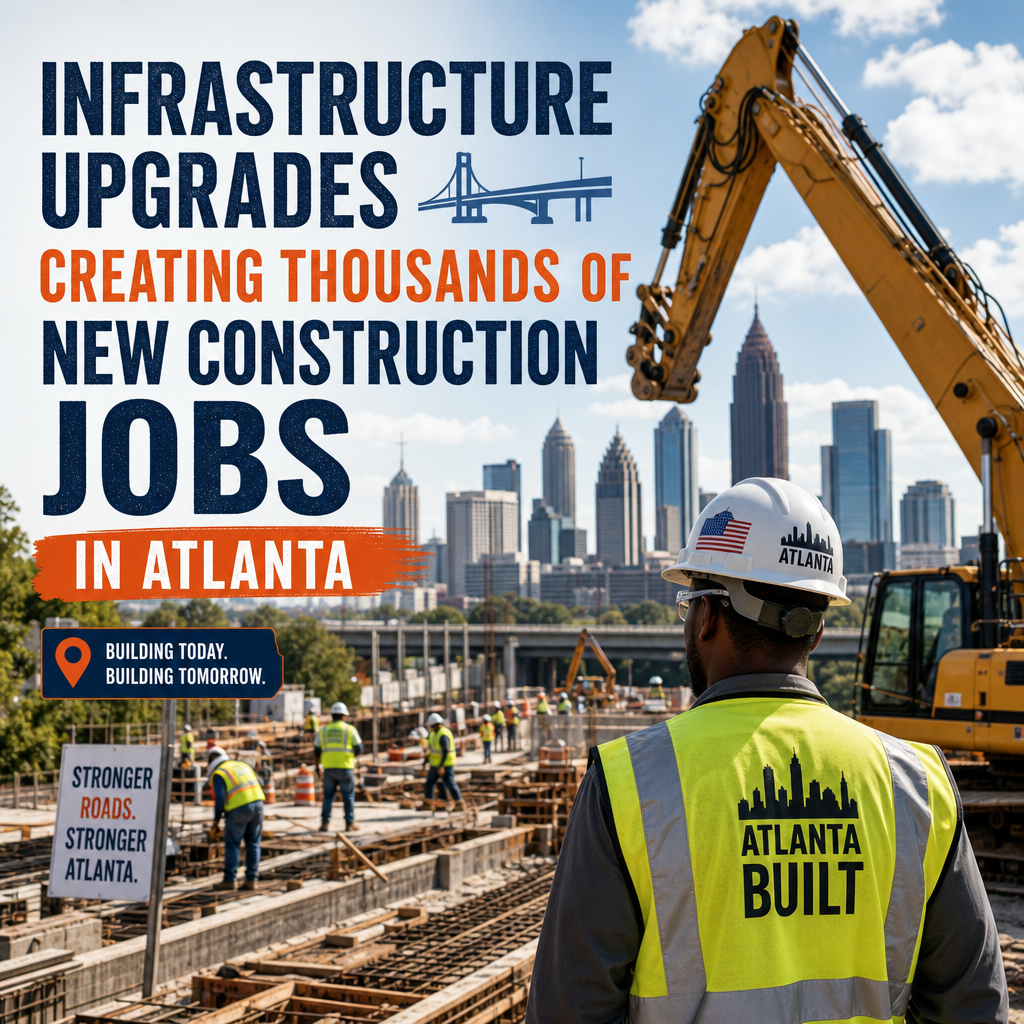
Infrastructure Upgrades Creating Thousands of New Construction Jobs in Atlanta
How Infrastructure Upgrades Are Creating Thousands of New Construction Jobs in Atlanta
Atlanta is in the middle of a major transformation. From highway expansions and bridge repairs to rail improvements and utility upgrades, the city’s infrastructure is being rebuilt and modernized at a rapid pace. These projects are doing more than improving traffic flow and public safety—they are also generating thousands of new construction jobs in Atlanta.
As cranes rise across the metro area, workers with a wide range of skills are finding new opportunities in one of the Southeast’s fastest-growing construction markets. For job seekers, contractors, and local businesses alike, infrastructure investment is reshaping the employment landscape.
Why Infrastructure Spending Is Surging
Atlanta’s population has continued to grow, and with that growth comes added pressure on roads, transit systems, water lines, and public facilities. Aging infrastructure can no longer keep up with demand, making upgrades a necessity rather than a luxury.

Several factors are driving this wave of spending:
- Increased traffic congestion on major roads and interstates
- Repair needs for bridges, tunnels, and aging public assets
- Expansion of public transit and commuter options
- Utility improvements for water, sewer, and stormwater systems
- Economic development projects tied to new housing and commercial growth
When state, county, and municipal agencies invest in these systems, the result is a steady pipeline of construction work that can last for years.
The Types of Projects Fueling Job Growth
Infrastructure projects are broad, and each one requires different crews, equipment, and expertise. In Atlanta, the most common projects creating new jobs include road widening, bridge replacement, airport upgrades, and utility modernization.
Transportation Projects
Road and highway work remains one of the biggest drivers of construction hiring. Crews are needed for:
- Asphalt paving
- Grading and excavation
- Concrete work
- Traffic control
- Drainage installation
- Signage and striping
Projects along I-285, I-20, and other major corridors often require large teams working for months or even years.

Transit and Rail Improvements
Public transit upgrades also create employment across multiple trades. Rail extensions, station renovations, and platform improvements need electricians, welders, laborers, carpenters, and heavy equipment operators.
These jobs support both short-term construction activity and long-term regional mobility goals.
Water and Sewer System Upgrades
Underground infrastructure is easy to overlook, but it is essential. Water main replacements, sewer line repairs, and stormwater improvements require skilled labor and specialized equipment. These projects often involve trenching, pipe installation, restoration, and inspection work.
Because many of these systems are aging, demand for workers in this area is expected to remain strong.
Public Facility Construction
Schools, government buildings, airports, and emergency facilities also require upgrades. These projects support general contractors, subcontractors, and a wide variety of trades, including framing, roofing, HVAC, and electrical work.
Who Benefits Most From the Job Boom
The rise in infrastructure work is opening doors for both experienced professionals and new entrants to the trade. Skilled workers are in especially high demand, but many projects also need entry-level laborers and apprentices.
The following groups are seeing the biggest opportunities:
- Heavy equipment operators
- CDL drivers and material haulers
- Concrete and asphalt crews
- Pipefitters and utility workers
- Electricians and technicians
- Surveyors and site inspectors
- Construction laborers and apprentices
For workers who want stable employment and room to advance, infrastructure projects can be a strong career path. Many roles offer overtime, training opportunities, and the chance to move into more specialized positions over time.
How These Projects Support the Local Economy
Construction jobs do not exist in isolation. When infrastructure spending rises, it creates a ripple effect throughout the local economy. Workers spend money in neighborhoods, contractors hire more staff, and suppliers see increased demand for materials and equipment.
This means infrastructure upgrades support:
- Local restaurants and retailers
- Tool and equipment suppliers
- Trucking and logistics companies
- Engineering and surveying firms
- Temporary staffing and recruiting agencies
In a city as large and connected as Atlanta, the impact can be significant. Every new project brings more payroll, more purchasing, and more business activity.
Challenges Facing the Construction Workforce
While the outlook is strong, the labor market is not without challenges. The demand for qualified workers often outpaces supply, especially for specialized trades. Many employers are competing for the same talent, which can make hiring difficult and increase project costs.
Other common challenges include:
- Labor shortages in key trades
- Rising material and equipment costs
- Tight project timelines
- Safety and compliance requirements
- Weather-related delays
Even with these obstacles, the need for infrastructure improvement is unlikely to slow down. That means construction professionals who are ready to work will continue to find opportunities.
What This Means for Atlanta’s Future
The growth of construction jobs in Atlanta is closely tied to the city’s long-term development. Better roads, improved transit, and upgraded public systems make Atlanta more attractive to businesses, residents, and investors. At the same time, these projects create steady employment for thousands of workers across the region.
In many ways, infrastructure is the foundation of future growth. Every bridge repaired, every road expanded, and every utility line upgraded helps build a stronger city while putting people to work.
A Strong Job Market Built on Real Investment
Atlanta’s infrastructure boom is more than a series of public works projects—it is a major engine for job creation. As the city continues to invest in transportation, utilities, and public facilities, the need for skilled labor will only grow.
For workers seeking reliable opportunities, infrastructure upgrades are opening the door to steady, meaningful construction careers. And for Atlanta as a whole, those jobs are helping build a safer, more connected, and more resilient future.