
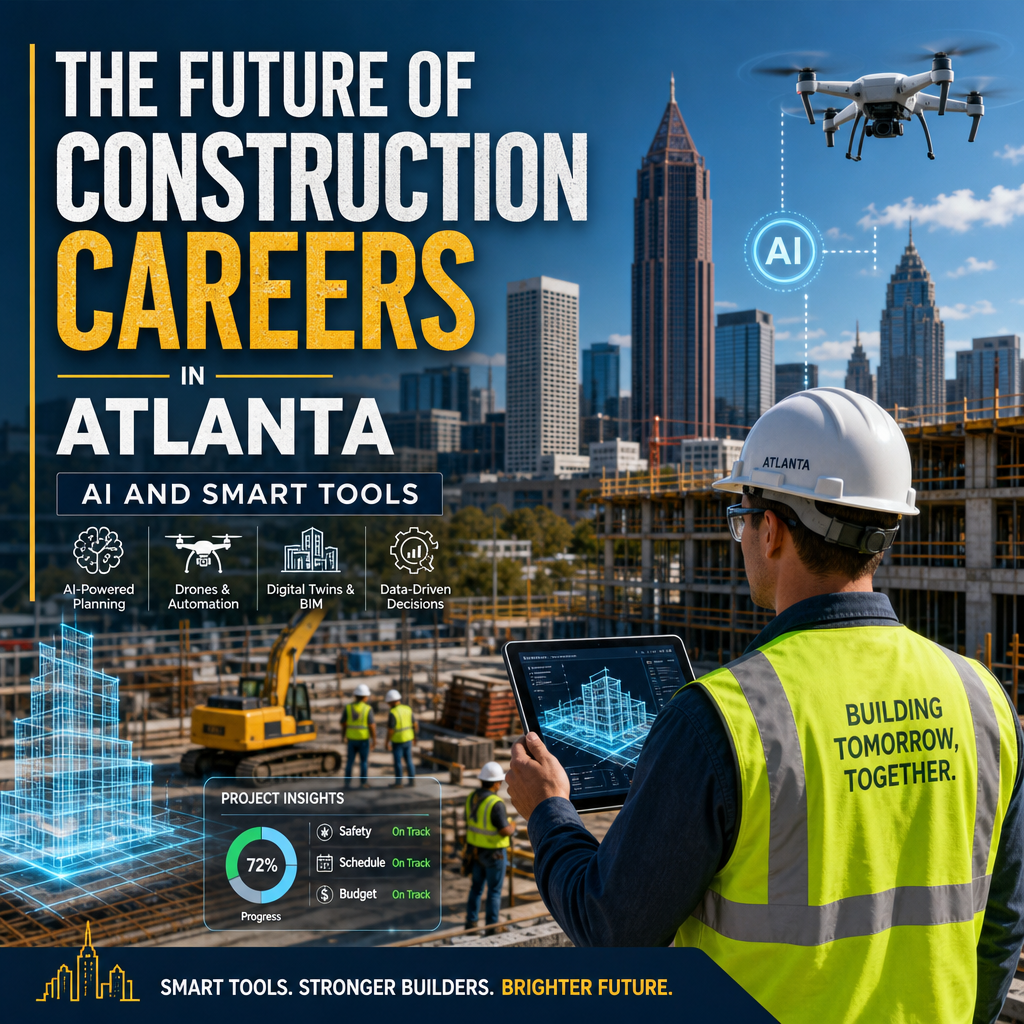
Future of Construction Careers in Atlanta: AI and Smart Tools
The Future of Construction Careers in Atlanta: AI, Smart Tools & Workforce Evolution
Atlanta’s skyline keeps changing, and so does the work behind it. From high-rise towers in Midtown to infrastructure upgrades across the metro area, the construction industry is entering a new era. The future of construction careers in Atlanta will be shaped by artificial intelligence, smarter tools, and a workforce that blends traditional craftsmanship with digital skills.
For job seekers, contractors, and trade professionals, this shift is not a threat—it is an opportunity. The next generation of construction jobs will likely be more efficient, more data-driven, and more connected than ever before.
Why Atlanta Is a Key Market for Construction Innovation
Atlanta is one of the Southeast’s fastest-growing cities. Population growth, corporate expansion, and ongoing transportation projects continue to drive demand for skilled labor.

That growth creates a perfect environment for construction innovation. Companies are under pressure to:
- Finish projects faster
- Control costs
- Reduce errors and delays
- Improve safety on job sites
- Address labor shortages
To meet those demands, many firms are adopting new technologies that change how projects are planned, managed, and completed.
How AI Is Changing Construction Work
Artificial intelligence is no longer limited to software companies or office jobs. In construction, AI is being used to improve decision-making at nearly every stage of a project.
Smarter Planning and Estimating
AI tools can analyze large amounts of project data to help with:
- Cost estimating
- Scheduling
- Material forecasting
- Risk assessment
Instead of relying only on manual calculations, contractors can use AI to predict delays, identify budget issues early, and make better planning decisions.
Better Project Management
AI-powered platforms can monitor progress in real time and flag potential problems before they become expensive. For example, if a delivery is delayed or a crew falls behind schedule, the system can alert managers immediately.
This gives project leaders more time to adjust labor, equipment, or timelines. In a city like Atlanta, where traffic, weather, and dense job sites can create complications, that kind of foresight is valuable.
Safer Job Sites
Safety remains one of the biggest priorities in construction. AI can help by analyzing camera feeds, wearable data, and site reports to detect hazards.
Some systems can identify:
- Workers entering restricted zones
- Equipment operating unsafely
- Missing protective gear
- Conditions that increase accident risk
These tools do not replace supervisors, but they do give them better information. That can lead to fewer injuries and a stronger safety culture overall.
Smart Tools Are Replacing Old Workflows
Alongside AI, smart construction tools are transforming everyday tasks. These technologies are making jobs more precise and helping crews work more efficiently.
Drones and Robotics
Drones are now used for site surveys, progress tracking, and inspections. They save time and reduce the need for workers to climb dangerous structures or manually measure large areas.
Robotics is also growing in areas like bricklaying, demolition, and repetitive material handling. While these machines are not replacing the entire workforce, they are changing the kind of work humans focus on.
Wearable Technology
Smart helmets, vests, and sensors can track worker location, fatigue, and environmental conditions. These tools help supervisors monitor safety and respond quickly when something goes wrong.
Digital Blueprints and BIM
Building Information Modeling, or BIM, has become a major part of modern construction. It allows teams to create detailed 3D digital models of a building before work begins.
This helps with:
- Collaboration between teams
- Detecting design conflicts
- Visualizing materials and systems
- Reducing costly rework
For Atlanta construction firms competing on tight schedules, BIM and similar tools are becoming standard rather than optional.
What Workforce Evolution Means for Construction Careers
The rise of AI and smart tools does not mean fewer careers in construction. It means different skills will matter more.
Technical Skills Will Matter More
Workers who understand digital tools will have an advantage. That includes familiarity with project management software, drones, layout tools, and data-based reporting.
Even entry-level workers may need basic comfort with tablets, apps, and digital communication.
Trades Will Still Be Essential
Despite automation, skilled labor remains the backbone of the industry. Electricians, plumbers, carpenters, welders, equipment operators, and laborers will continue to be in demand.
What is changing is how these professionals work. Many will use smarter systems to do their jobs more accurately and safely.
Training and Upskilling Will Be Critical
Construction employers in Atlanta will likely invest more in training. Workers who keep learning will be better prepared for new equipment, software, and methods.
Good training may include:
- Safety certification updates
- Digital construction tools
- Equipment technology
- Project coordination software
- AI-assisted workflow systems
This creates a path for long-term career growth, especially for workers willing to adapt.
Opportunities for New Workers in Atlanta
For people entering the field, the future looks promising. Construction careers in Atlanta will still offer strong demand, competitive pay, and room for advancement.
New workers who combine hands-on ability with tech awareness may stand out quickly. That could include:
- Apprentices who learn both trade skills and digital tools
- Supervisors who can manage crews and software
- Estimators who use AI-assisted platforms
- Safety professionals who understand wearable technology
- Project coordinators who can interpret data and communicate clearly
In other words, the most valuable workers will be those who can bridge the gap between the jobsite and the digital world.
Looking Ahead
The future of construction careers in Atlanta will not be built by technology alone. It will be built by people who know how to use technology well.
AI, smart tools, and automation are reshaping how projects are planned and executed, but the industry still depends on skilled professionals, problem solvers, and leaders on the ground. For Atlanta’s construction workforce, that means more opportunity, new responsibilities, and a chance to grow with the city itself.
As the industry evolves, one thing is clear: the crews that adapt will help build the next chapter of Atlanta’s future.