

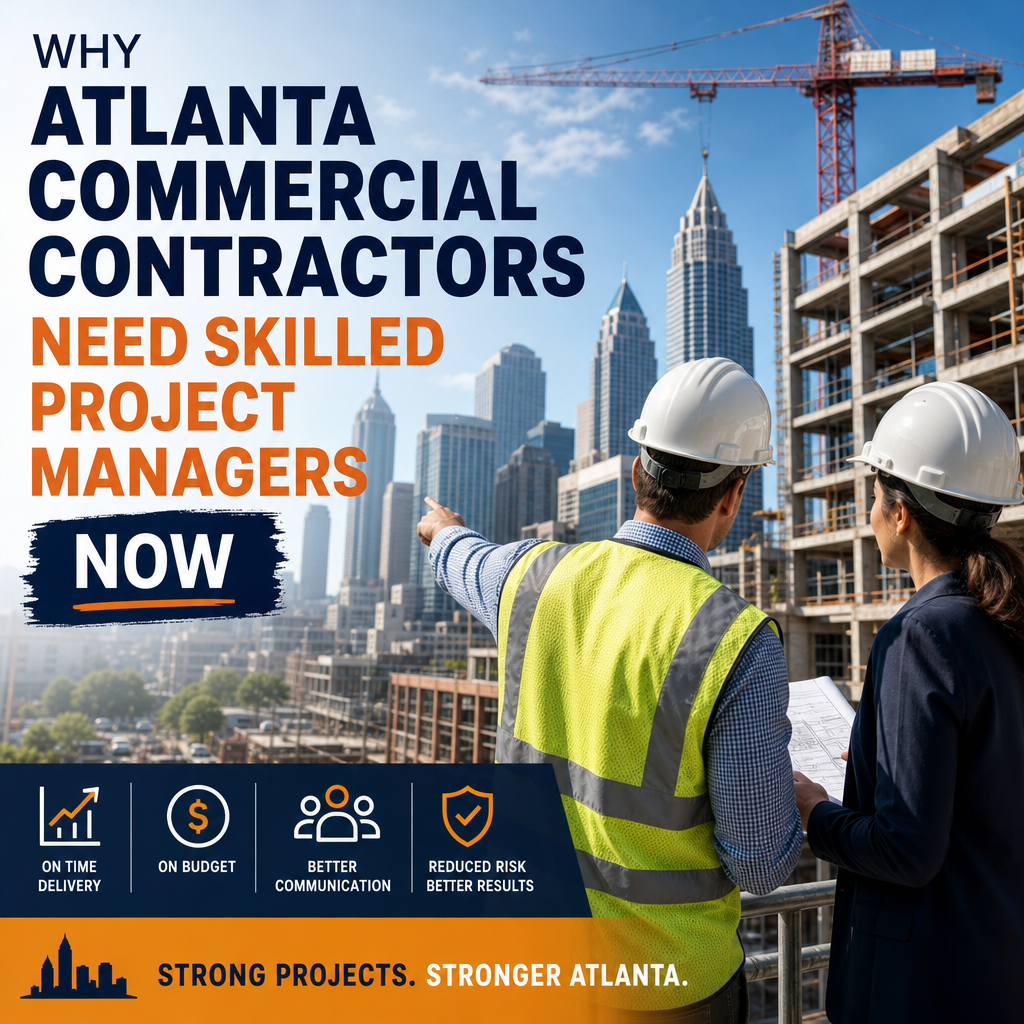
Why Atlanta Commercial Contractors Need Skilled Project Managers Now
Why Atlanta’s Commercial Contractors Need Skilled Project Managers Now More Than Ever
Atlanta’s commercial construction market is moving fast. Office towers, mixed-use developments, healthcare facilities, warehouses, hospitality projects, and tenant improvements are all competing for attention in one of the Southeast’s busiest building environments. With tighter schedules, higher client expectations, and more complex jobsite coordination, Atlanta commercial contractors can no longer rely on experience alone to keep projects on track.
The need for skilled project managers has never been greater.
A More Complex Construction Market
Commercial construction in Atlanta is shaped by rapid growth, rising material costs, labor shortages, and evolving compliance requirements. Every project involves multiple moving parts, and even small delays can create expensive ripple effects.

Project managers are the people who bring order to that complexity. They coordinate subcontractors, monitor budgets, communicate with stakeholders, and make sure the build stays aligned with the original scope. Without that leadership, jobs can quickly drift off schedule or exceed cost expectations.
For Atlanta commercial contractors, this is especially important because local projects often involve dense urban sites, active business districts, and demanding timelines. In a city where access, traffic, permits, and coordination all matter, strong project management is not optional.
Why Skilled Project Managers Make the Difference
A skilled project manager does more than track deadlines. They protect the contractor’s reputation, improve communication, and help the entire team work more efficiently.
They keep budgets under control
Commercial projects often face unexpected costs, from design changes to material shortages. A strong project manager monitors spending closely, flags risks early, and helps decision-makers respond before problems escalate.
They improve scheduling
Construction delays are expensive. Skilled project managers understand how to sequence work properly, manage dependencies, and keep subcontractors aligned. When schedules are realistic and monitored daily, teams can avoid bottlenecks and wasted labor.

They strengthen communication
On a commercial job, communication breakdowns can lead to mistakes, change orders, and disputes. Project managers serve as the central point of contact between owners, architects, engineers, field teams, and vendors. That clear communication helps prevent confusion and keeps everyone working toward the same goal.
They reduce risk
Every construction project comes with risk, including safety issues, contract disputes, inspection delays, and supply chain interruptions. Project managers identify these risks early and create backup plans to minimize disruption.
Atlanta’s Growth Raises the Stakes
Atlanta continues to attract national companies, developers, and investors. That growth creates opportunity, but it also raises expectations. Clients want faster delivery, better coordination, and cleaner reporting. They want confidence that their project will be completed on time and within budget.
This is where skilled project managers become a competitive advantage for Atlanta commercial contractors. Contractors with strong management teams are better positioned to win bids, retain repeat clients, and handle larger, more complex projects.
In a competitive market, the contractor who can demonstrate control often earns the job.
Technology Has Changed the Job
Project management today is not the same as it was even a few years ago. Digital tools now play a major role in planning, tracking, and communication. Contractors rely on software for scheduling, document control, cost tracking, and field reporting.
That means project managers must know how to use technology effectively. They need to interpret data, manage information quickly, and keep both office and field teams connected.
Skilled project managers use these tools to:
- Track progress in real time
- Share updated plans and documents
- Manage RFIs and submittals efficiently
- Monitor labor and material costs
- Identify delays before they become serious
For contractors in Atlanta, where jobs often move quickly and involve many stakeholders, that level of visibility is essential.
What Happens Without Strong Project Management?
When project management is weak, the problems show up fast. Deadlines slip. Costs rise. Subcontractors get out of sync. Owners lose confidence. Field teams spend more time fixing issues than building.
Common signs of poor project management include:
- Missed milestones
- Inaccurate budgets
- Poor communication between teams
- Unclear scope changes
- Rework caused by scheduling conflicts
- Frustrated clients
These problems hurt more than just one project. They can damage a contractor’s reputation and make it harder to win future work.
The Best Contractors Invest in Leadership
The most successful Atlanta commercial contractors understand that project managers are not just administrators. They are leaders. They keep the job moving, the team aligned, and the client informed. They turn plans into results.
As the Atlanta market continues to grow more competitive and more demanding, contractors who invest in skilled project managers will be better prepared to handle complexity and deliver quality work. That investment pays off in fewer delays, better margins, and stronger client relationships.
Conclusion
Commercial construction in Atlanta is not getting simpler. Projects are larger, timelines are tighter, and expectations are higher. That is exactly why skilled project managers matter more than ever.
For Atlanta commercial contractors, strong project management is the key to staying competitive, protecting profits, and delivering successful projects in a fast-changing market.