

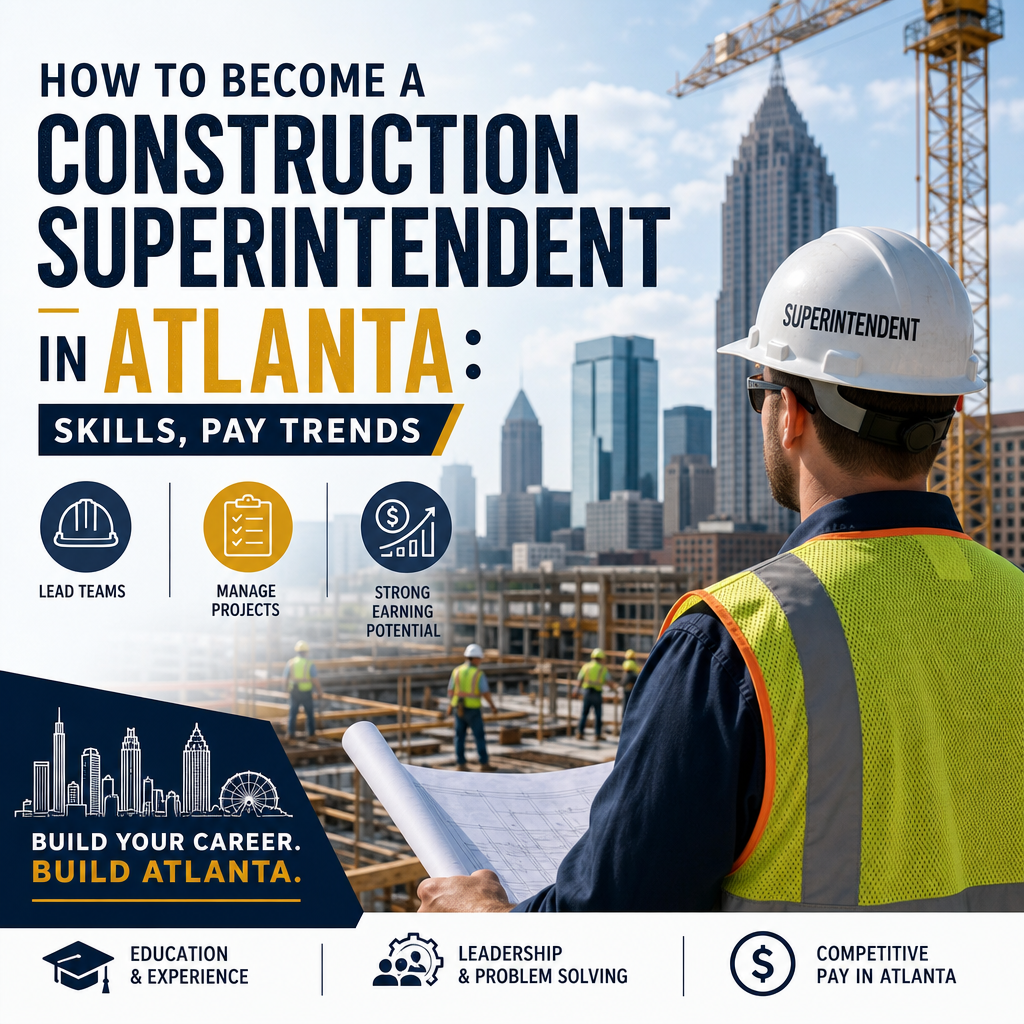
How to Become a Construction Superintendent in Atlanta: Skills, Pay Trends
How to Become a Construction Superintendent in Atlanta: Skills, Pathways & Pay Trends
If you want a leadership role in the building industry, learning how to become a construction superintendent in Atlanta is a smart place to start. Atlanta’s construction market continues to grow across commercial, residential, healthcare, and infrastructure projects, creating steady demand for experienced field leaders who can keep jobs on schedule, on budget, and compliant with safety standards.
A construction superintendent is often the person who turns plans into reality on-site. They manage crews, coordinate subcontractors, solve problems quickly, and make sure the work matches the project timeline and specifications. In a competitive city like Atlanta, this role can offer strong career growth and solid earning potential.
What a Construction Superintendent Does
A construction superintendent is responsible for the day-to-day operations of a construction site. While project managers focus more on contracts, budget, and client communication, superintendents handle the field execution.

Common responsibilities include:
- Overseeing job site activities
- Scheduling subcontractors and deliveries
- Monitoring quality control
- Enforcing safety procedures
- Reading blueprints and construction documents
- Tracking progress against deadlines
- Reporting issues to project managers and owners
In Atlanta, superintendents often work on fast-moving projects where coordination matters. Whether it’s a mid-rise apartment complex in Midtown or a retail buildout in Buckhead, the superintendent keeps the field moving efficiently.
Skills You Need to Succeed
Becoming a great superintendent takes more than technical knowledge. Employers in Atlanta look for strong leadership, communication, and problem-solving skills.
Technical Skills
You should be comfortable with:
- Blueprint and plan reading
- Construction scheduling
- Building codes and permits
- Safety regulations, including OSHA standards
- Construction software and documentation tools
These skills help you manage the site with confidence and avoid costly delays.

Leadership Skills
A superintendent leads multiple people every day, so leadership is essential. You need to:
- Direct crews clearly
- Handle conflicts professionally
- Keep subcontractors accountable
- Make quick decisions under pressure
Good superintendents are respected because they stay calm, organized, and focused.
Communication Skills
You will speak with project managers, inspectors, subcontractors, suppliers, and clients. Strong communication helps prevent mistakes and keeps everyone aligned. Clear daily reports and site updates are also part of the job.
Education and Experience Pathways
There is no single path for becoming a superintendent, but most professionals follow a mix of education and hands-on experience.
Start in the Field
Many superintendents begin as:
- Carpenters
- Laborers
- Assistant superintendents
- Foremen
- Skilled trades workers
Starting in the field gives you a real understanding of how projects are built. That experience is valuable when you later manage teams and schedules.
Consider Formal Education
While not always required, a degree can help. Many employers prefer candidates with education in:
- Construction management
- Civil engineering
- Building science
- Architecture
- Project management
An associate or bachelor’s degree may make it easier to move into leadership roles, especially on larger projects.
Gain Certifications
Certifications can improve your resume and show employers that you take your role seriously. Helpful credentials may include:
- OSHA 10 or OSHA 30
- CPR and first aid
- Lean construction training
- Project management certifications
- Site safety credentials
In Atlanta’s active construction market, certifications can help you stand out when competing for better-paying roles.
Breaking Into the Atlanta Market
Atlanta is one of the Southeast’s busiest construction hubs. To get hired, you’ll need both experience and local market awareness.
A few practical steps include:
- Build a strong resume focused on job site leadership
- Highlight project types you’ve worked on, such as commercial or multifamily
- Network with local general contractors and subcontractors
- Apply for assistant superintendent roles if you are moving up from the field
- Stay current on Georgia building regulations and safety expectations
Many employers value candidates who already understand the pace and complexity of Atlanta-area projects.
Pay Trends for Construction Superintendents in Atlanta
Salary can vary based on experience, project size, employer, and specialization. In general, pay trends for construction superintendent roles in Atlanta remain competitive because of steady development and high demand for skilled leadership.
Entry-level or assistant superintendent positions may start lower, while experienced superintendents working on large commercial or healthcare projects can earn significantly more. Factors that influence pay include:
- Years of experience
- Type of construction project
- Union or non-union environment
- Certifications and education
- Ability to manage multiple crews or large sites
Superintendents in Atlanta often benefit from a healthy job market, especially if they have strong scheduling skills and a proven safety record. Those who can manage complex projects and keep work on track are typically the most valuable to employers.
Career Growth and Long-Term Outlook
The superintendent role can lead to even bigger opportunities. With experience, you may move into positions such as:
- Senior superintendent
- General superintendent
- Project manager
- Construction operations manager
- Director of construction
Atlanta’s continued growth supports long-term demand for experienced construction professionals. As the city expands, superintendents who can lead efficiently and adapt to changing project demands will remain in high demand.
Final Thoughts
Learning how to become a construction superintendent in Atlanta means understanding both the technical and leadership sides of the job. Start by building field experience, strengthening your communication skills, and earning the certifications that matter. If you can lead crews, manage schedules, and maintain quality on a busy job site, you’ll be well positioned for a rewarding career in one of the Southeast’s strongest construction markets.