
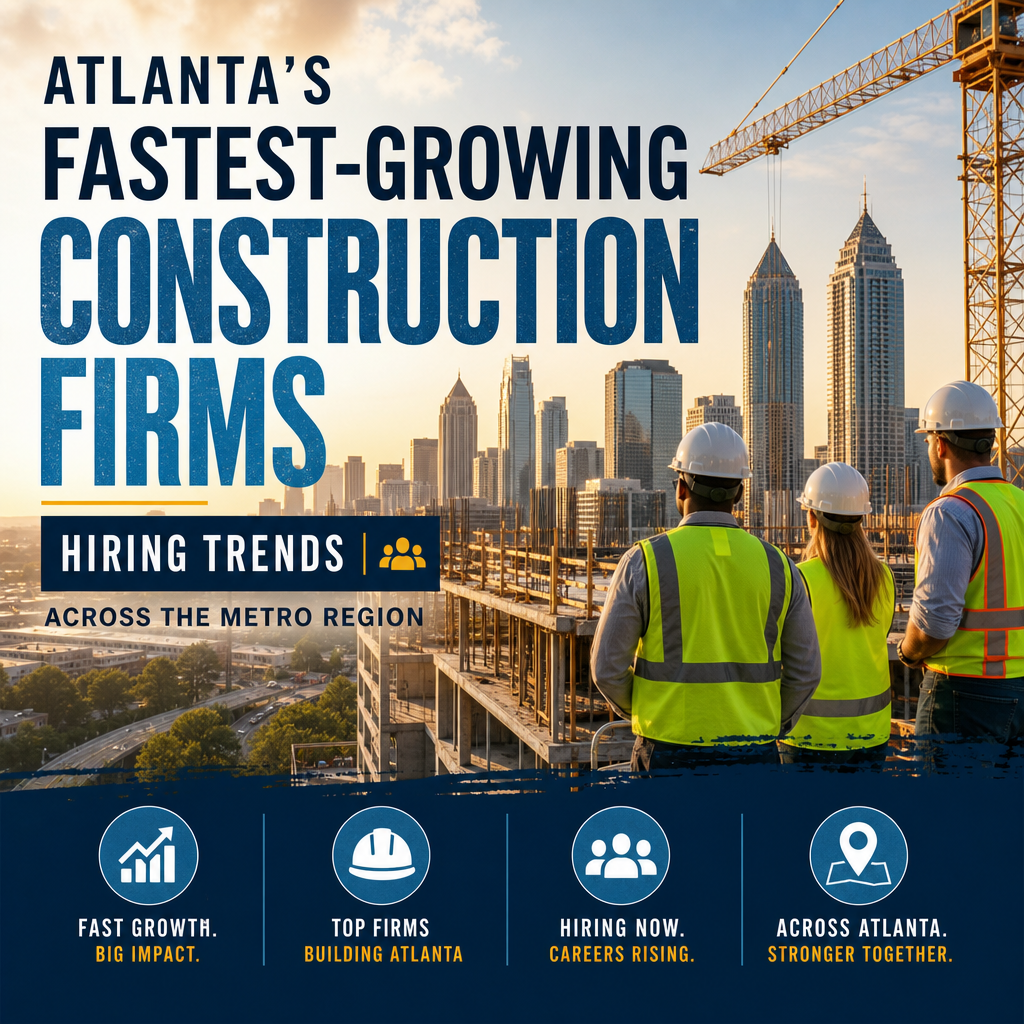
Atlanta’s Fastest-Growing Construction Firms Hiring Trends Across the Metro Region
Atlanta’s Fastest-Growing Construction Firms: Hiring Trends Across the Metro Region
Atlanta’s construction market has been moving fast for years, and the pace shows no sign of slowing. From downtown high-rises to suburban warehouses, transportation work, and residential development, the region continues to attract major projects and the companies that build them. As a result, Atlanta’s fastest-growing construction firms are hiring aggressively to keep up with demand.
The metro area’s growth is not just about new buildings. It is also about infrastructure expansion, population growth, and a steady pipeline of public and private investment. That combination is creating a highly competitive labor market, where firms are searching for workers with both technical skills and adaptability.
Why Construction Hiring Is Surging in Atlanta
Atlanta remains one of the Southeast’s strongest construction hubs for several reasons.

First, population growth continues to drive housing, retail, healthcare, and school construction. More people means more demand for roads, utilities, and public services.
Second, the metro region has become a logistics and distribution center. Warehouses, industrial facilities, and campus-style developments are popping up across areas like Gwinnett, Cobb, Fulton, and Clayton counties.
Third, large-scale infrastructure and redevelopment projects keep contractors busy. Whether it is transit work, airport-related projects, or mixed-use developments, firms need crews that can scale quickly.
This broad range of work is one reason Atlanta’s fastest-growing construction firms are expanding their teams in multiple directions at once.
The Roles in Highest Demand
Hiring trends across the metro region show strong demand for both field and office roles. While every company has different needs, several positions appear repeatedly across job boards and recruitment efforts.
Skilled Trades
Labor shortages continue to shape hiring, especially for:
- Carpenters
- Electricians
- Plumbers
- Welders
- Ironworkers
- Heavy equipment operators
- Concrete and masonry crews
These roles are essential on nearly every jobsite, and firms are often competing on pay, benefits, and project stability to attract experienced workers.
Project Management and Supervision
As project volumes increase, companies need more people who can coordinate budgets, schedules, subcontractors, and compliance requirements. Common openings include:
- Project managers
- Assistant project managers
- Superintendents
- Estimators
- Field engineers
These positions are especially important for firms taking on larger, more complex projects in the Atlanta metro area.
Safety and Compliance Specialists
With more job sites active across the region, construction safety remains a top priority. Firms are hiring safety managers and compliance professionals who can reduce risk while keeping projects on schedule.
Administrative and Support Roles
Growth also creates demand for office staff, including:
- Payroll and accounting support
- Procurement specialists
- HR and recruiting professionals
- Permit and document control coordinators
These roles may not be visible on the jobsite, but they are crucial to keeping projects moving.
What Hiring Trends Reveal About the Market
The hiring patterns of Atlanta’s fastest-growing construction firms point to a few clear trends.
1. Companies Want Versatility
Employers are looking for candidates who can handle changing jobsite conditions and wear multiple hats when needed. Workers with cross-training or diverse project experience often have an advantage.
2. Experience Still Matters
While entry-level hiring remains important, firms are placing a premium on proven experience. Candidates who can show a record of finishing jobs safely, on time, and within budget are especially attractive.
3. Speed Is a Competitive Advantage
In a market as active as Atlanta’s, firms that hire quickly can staff up before project delays occur. That means candidates who respond fast and communicate clearly often stand out.
4. Retention Is a Major Concern
Hiring is only part of the challenge. Many firms are focusing on retention through better benefits, training opportunities, and more predictable work schedules. Keeping good workers is just as important as finding them.
How Metro Growth Is Shaping Employer Strategy
The Atlanta metro region is sprawling, and that creates hiring challenges as well as opportunities. A company working in Midtown may face very different labor needs than one focused on industrial development in the suburbs.
Because of this, many construction firms are broadening their recruiting strategies. They are hiring locally, expanding apprenticeship pipelines, and partnering with trade schools and workforce programs. Some are also investing in technology to improve scheduling, communication, and job tracking.
These changes help companies remain competitive in a market where projects are plentiful but labor is tight.
What Job Seekers Should Know
For workers looking to enter or advance in construction, Atlanta offers strong opportunities. The best candidates tend to combine technical skills with reliability and a willingness to learn.
A few ways to stand out include:
- Earning certifications relevant to your trade
- Showing up consistently and on time
- Building safety habits into your daily work
- Learning how to use digital tools and project software
- Being open to different project types and locations
In a busy market, adaptability can be just as valuable as experience.
The Outlook for Construction Hiring in Atlanta
Looking ahead, construction hiring in Atlanta is likely to stay strong. Population growth, commercial expansion, infrastructure work, and industrial development all suggest continued demand for labor and leadership talent.
For Atlanta’s fastest-growing construction firms, the challenge will be balancing growth with workforce stability. Those that can recruit effectively, train well, and retain skilled people are likely to stay ahead.
For job seekers, that means opportunity. For employers, it means the race for talent is still on.