
How Construction Project Coordinators Keep Atlanta Job Sites Running Smoothly
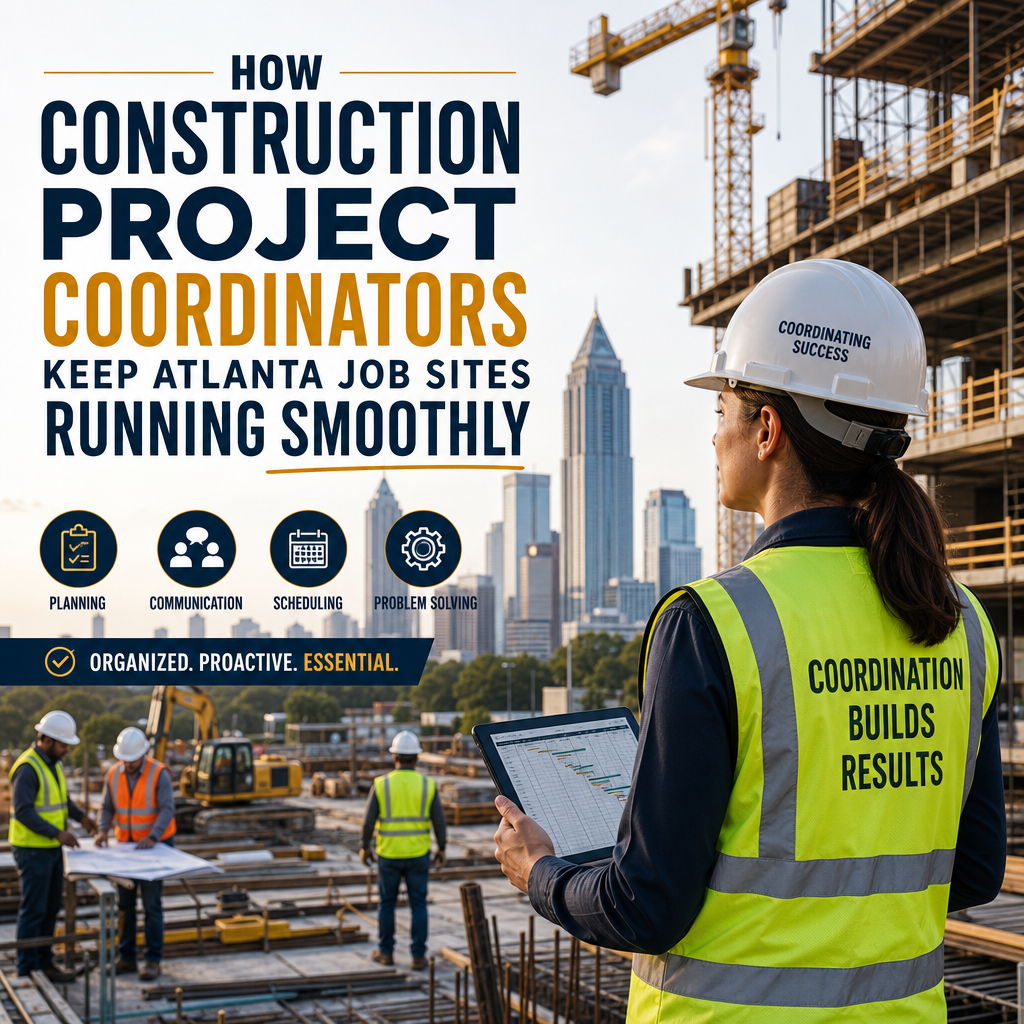
How Construction Project Coordinators Keep Atlanta Job Sites Running Smoothly
Construction sites in Atlanta move fast. Between tight schedules, changing weather, urban traffic, permit requirements, and multiple crews on one property, even a well-planned project can get off track quickly. That is where construction project coordinators play a critical role.
They help keep people aligned, tasks organized, and work moving forward. On busy job sites, their presence can make the difference between a project that stays on schedule and one that falls behind.
Why Coordination Matters on Atlanta Job Sites
Atlanta’s construction environment brings unique challenges. Projects may be in dense commercial districts, growing suburban areas, or neighborhoods with strict access limitations. Crews often need to work around inspections, deliveries, subcontractor schedules, and client expectations.

Without strong coordination, small issues can become costly delays. Missed material deliveries can stall a crew. Poor communication can cause rework. Incomplete paperwork can slow inspections. Construction project coordinators help reduce these risks by keeping all parts of the project connected.
The Core Responsibilities of a Construction Project Coordinator
A construction project coordinator supports the project manager, field teams, subcontractors, and clients by handling the details that keep a job site organized. Their work may not always be visible from the outside, but it shapes how smoothly a project runs.
1. Managing schedules
One of the most important duties is tracking timelines. Coordinators help create and update schedules so each phase of the project happens in the right order.
They may:
- Confirm start dates and completion targets
- Track subcontractor availability
- Coordinate deliveries and inspections
- Adjust timelines when delays occur
This keeps everyone informed and helps avoid conflicts between crews.

2. Improving communication
Construction projects involve many moving parts. Field workers, suppliers, architects, inspectors, and owners all need accurate information. Coordinators serve as a communication hub, making sure updates reach the right people quickly.
Good communication prevents misunderstandings and helps teams respond faster when issues come up. On a busy Atlanta job site, that can save both time and money.
3. Organizing documents and permits
Paperwork is a major part of construction work. Coordinators often manage documents such as permits, drawings, contracts, inspection records, and change orders.
Keeping these records organized helps the project stay compliant and makes it easier to resolve questions later. It also reduces the chance of delays caused by missing approvals or outdated plans.
4. Supporting material and equipment logistics
A project can only move as fast as its supplies arrive. Coordinators help track materials, confirm delivery dates, and make sure equipment is available when needed.
This is especially important in Atlanta, where traffic and delivery timing can affect the flow of materials to the site. Careful planning helps crews stay productive instead of waiting around for supplies.
How They Keep Job Sites Moving Smoothly
Construction project coordinators do more than manage tasks. They help create order in a high-pressure environment. Their job is to anticipate problems, solve issues early, and keep communication flowing.
Reducing downtime
When crews arrive and discover missing materials or a scheduling conflict, work stops. Coordinators help prevent these interruptions by checking details ahead of time and following up on outstanding items.
Keeping teams aligned
Different teams often work on the same site at different times. If one crew finishes late or another starts too early, confusion can spread quickly. Coordinators help make sure everyone understands the plan and the next steps.
Handling changes efficiently
Change is common in construction. Plans may shift due to client requests, weather, supply delays, or field conditions. Coordinators help document those changes and communicate them clearly so the project can adapt without losing momentum.
The Value of Coordination in Atlanta’s Construction Market
Atlanta continues to grow, and that growth brings more demand for residential, commercial, and mixed-use construction. With more projects comes more complexity. Coordinators help contractors manage that complexity while maintaining quality and accountability.
Their role is especially valuable on:
- Multi-family developments
- Office build-outs
- Retail construction
- Infrastructure projects
- Renovations in active business areas
In each of these settings, staying organized is just as important as having skilled labor. A well-coordinated site tends to run safer, more efficiently, and with fewer costly surprises.
Skills That Make a Strong Coordinator
Successful construction project coordinators bring a mix of technical knowledge and practical problem-solving. They need to stay calm under pressure and keep multiple details moving at once.
Helpful skills include:
- Strong organization
- Clear written and verbal communication
- Time management
- Attention to detail
- Familiarity with construction processes
- Ability to work with diverse teams
These skills help coordinators support the field while also keeping office-side responsibilities under control.
A Key Role in Project Success
Construction project coordinators may not swing hammers or pour concrete, but their work is essential to every stage of a build. They keep schedules on track, documents in order, teams informed, and job sites running efficiently.
On Atlanta construction projects, where deadlines and coordination challenges are part of daily life, their role is especially important. When a coordinator is doing their job well, the entire site benefits from better flow, fewer delays, and a stronger chance of finishing on time.