
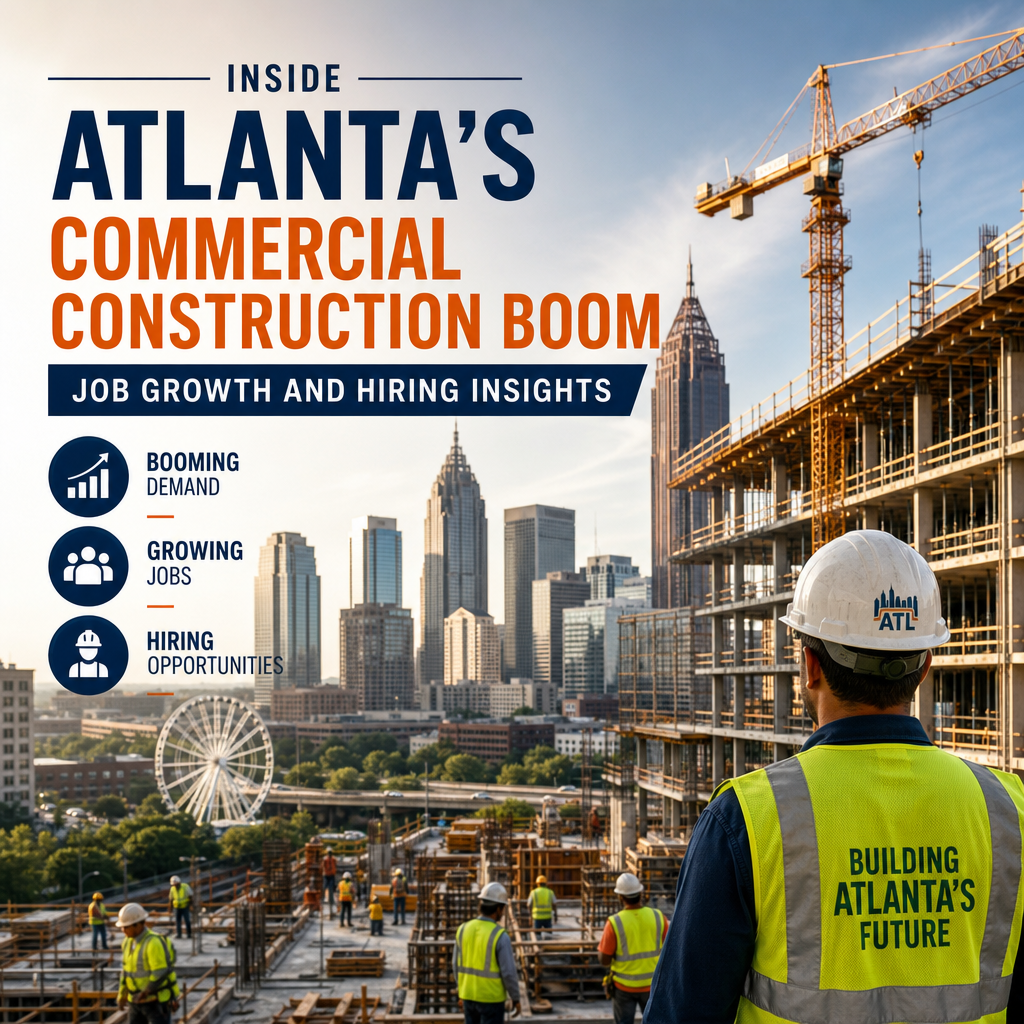
Inside Atlanta’s Commercial Construction Boom: Job Growth and Hiring Insights
Inside Atlanta’s Commercial Construction Boom: Job Growth & Hiring Insights
Atlanta’s skyline is changing fast. New office towers, mixed-use developments, warehouses, hospitality projects, and public infrastructure upgrades are transforming the city and its surrounding suburbs. Behind that growth is a commercial construction boom that is reshaping the local economy and creating strong demand for skilled workers.
For employers, contractors, and job seekers, the message is clear: Atlanta’s construction market is active, competitive, and full of opportunity. Understanding where the jobs are coming from—and what employers are looking for—can help businesses plan smarter and candidates make better career moves.
Why Atlanta’s Construction Market Is Growing
Several factors are fueling Atlanta’s commercial construction surge. The region continues to attract major corporate relocations and expansions, while population growth keeps pushing demand for retail, logistics, healthcare, and multifamily projects.
Key drivers behind the boom
- Population growth: More residents mean more schools, offices, housing, and support facilities.
- Corporate expansion: Atlanta remains a magnet for national companies building new headquarters and branch operations.
- Logistics and distribution: The city’s location makes it a major hub for warehousing and industrial development.
- Urban redevelopment: Older areas are being reimagined with new mixed-use and transit-oriented projects.
- Public investment: Infrastructure, transit, and civic upgrades are contributing to construction activity.
This combination has made Atlanta one of the most active construction markets in the Southeast.
Job Growth Across Commercial Construction
The commercial construction boom is not just about cranes and concrete. It is also creating steady job growth across a wide range of roles. From field labor to project management, companies need talent at every level.
In-demand roles include:
- Project managers
- Superintendents
- Estimators
- Civil engineers
- Skilled trades workers
- Equipment operators
- Safety coordinators
- Project coordinators
- BIM and construction technology specialists
Labor demand is especially strong in roles that require both technical knowledge and hands-on experience. Employers are also looking for workers who can adapt to fast-moving schedules and complex jobsite conditions.
Why Hiring Is So Competitive
As project volume increases, so does competition for talent. Many construction companies are competing not only with each other, but also with manufacturing, logistics, and infrastructure employers that need similar skill sets.
Common hiring challenges
- Shortage of skilled trades workers: Electricians, welders, carpenters, and plumbers remain in high demand.
- Experience gaps: Some employers need mid-level talent, but the talent pipeline is still developing.
- Retention issues: Skilled workers often have multiple job options, which can increase turnover.
- Project timing pressures: Fast bid cycles and tight deadlines can make hiring urgent.
For companies, this means a reactive hiring strategy is no longer enough. Atlanta employers need to be proactive, flexible, and clear about what makes their opportunity attractive.
What Employers Are Looking For
Construction hiring in Atlanta is becoming more selective, especially for commercial projects that involve tighter budgets, more complex regulations, and advanced technology.
Top qualities employers value
- Proven safety record
- Ability to work in teams
- Reliability and punctuality
- Familiarity with commercial jobsite procedures
- Experience with scheduling and coordination tools
- Strong communication skills
- Certifications or licenses when required
Employers also want candidates who can solve problems quickly and work well across different project phases. In a busy market, versatility matters.
How Job Seekers Can Stand Out
For candidates, the Atlanta market offers strong possibilities—but also high expectations. A polished resume and relevant credentials can make a big difference.
Ways to improve your chances
-
Highlight commercial project experience
Be specific about the types of buildings and systems you have worked on. -
Show safety awareness
Employers want workers who understand OSHA standards and jobsite safety protocols. -
List certifications clearly
Include CDL, OSHA training, equipment certifications, and trade licenses. -
Emphasize technology skills
Experience with project management software, digital plans, or BIM tools can set you apart. -
Be ready to move quickly
In a busy market, companies may hire fast. Responding promptly can help you stay ahead.
The Role of Staffing and Recruiting Partners
With demand rising, many contractors are turning to staffing and recruiting partners to help fill open positions faster. This can be especially useful for short-term project needs, seasonal spikes, or specialized roles that are hard to source.
A strong recruiting partner can help companies:
- Identify qualified candidates quickly
- Reduce time-to-hire
- Screen for experience and certifications
- Improve workforce planning
- Fill both temporary and direct-hire roles
For job seekers, these partners can also open doors to projects that may not be publicly advertised.
What This Means for Atlanta’s Future
Atlanta’s commercial construction boom is more than a short-term trend. It reflects long-term growth in population, business investment, and infrastructure development. That means the need for construction talent is likely to continue.
For employers, success will depend on building strong hiring pipelines and offering competitive compensation, benefits, and advancement opportunities. For job seekers, the market rewards those who bring experience, flexibility, and a willingness to keep learning.
As Atlanta keeps building upward and outward, the companies and workers who adapt fastest will be best positioned to grow with it.