
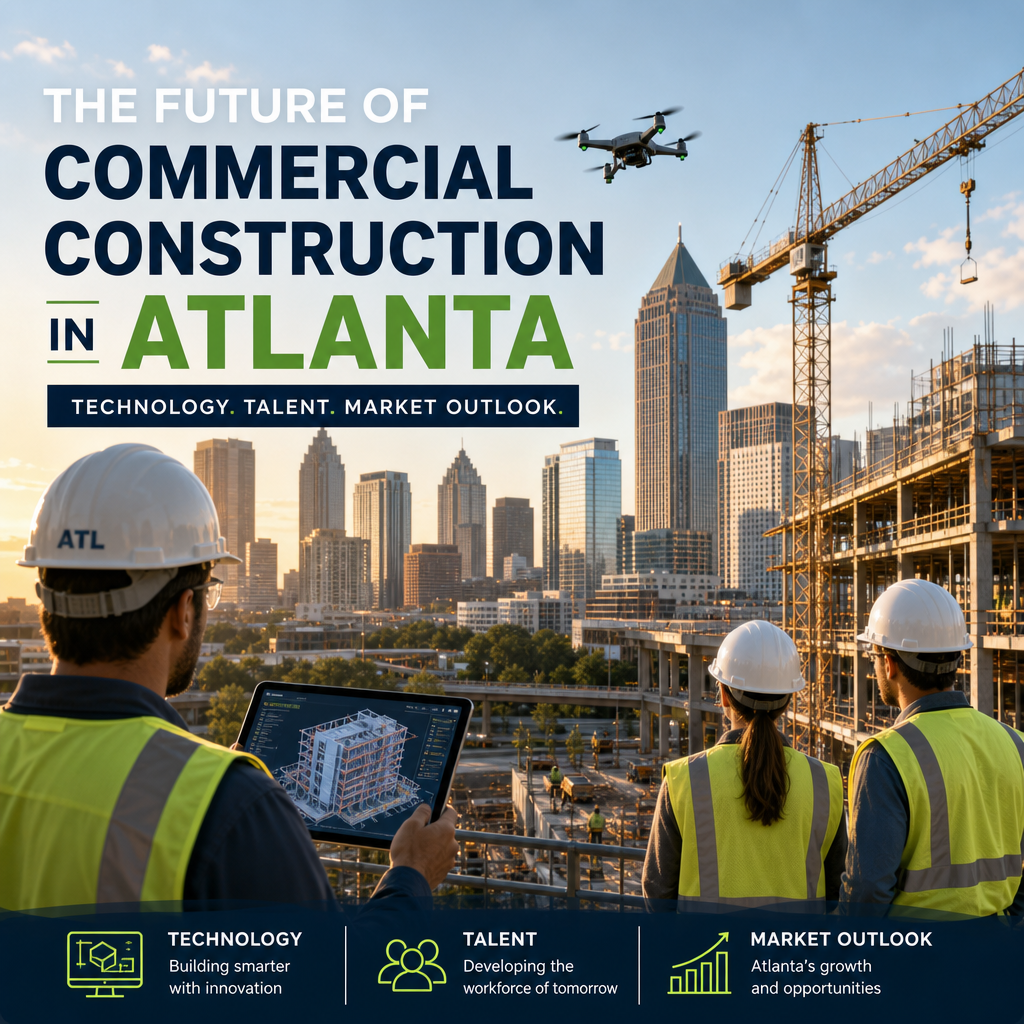
The Future of Commercial Construction in Atlanta: Technology, Talent, Market Outlook
The Future of Commercial Construction in Atlanta: Technology, Talent & Market Outlook
Atlanta has long been one of the South’s most active building markets, and that momentum is not slowing down. From office towers and mixed-use developments to logistics hubs and healthcare facilities, commercial construction in Atlanta is evolving quickly. The next few years will be shaped by smarter technology, shifting labor dynamics, and a market that continues to balance growth with caution.
For developers, contractors, and property owners, understanding these changes is essential. The companies that adapt early will be better positioned to win projects, control costs, and deliver buildings that meet modern expectations.
Technology Is Changing How Projects Get Built
Construction technology is no longer a niche advantage. In Atlanta, it is becoming a standard part of how commercial projects are planned and managed.
Digital planning and design
Tools like Building Information Modeling, or BIM, are helping teams visualize projects before ground is even broken. This improves coordination between architects, engineers, and contractors, reducing costly mistakes and delays.
Other digital tools are also becoming more common:
- Cloud-based project management platforms
- Drone surveys and site monitoring
- 3D scanning for existing conditions
- AI-assisted estimating and scheduling
These technologies are especially valuable in a fast-moving market like Atlanta, where tighter timelines and complex sites can create major coordination challenges.
Smarter jobsite operations
Technology is also improving safety and efficiency in the field. Wearables, connected equipment, and mobile reporting tools allow project teams to track progress in real time. That means faster decision-making and fewer surprises.
For commercial developers, this can translate into better budget control and more predictable delivery dates. In a competitive market, that predictability matters as much as speed.
The Talent Gap Remains a Major Challenge
Even with better tools, construction still depends on people. One of the biggest issues facing commercial construction in Atlanta is the ongoing shortage of skilled labor.
More demand, fewer experienced workers
As experienced tradespeople retire, many firms are struggling to replace them with trained workers. At the same time, demand remains strong across several sectors, including industrial, healthcare, hospitality, and multifamily support projects.
This creates a difficult mix:
- Tight labor availability
- Rising wage pressure
- More competition for skilled subcontractors
- Greater need for workforce training
Contractors that invest in apprenticeship programs, partnerships with trade schools, and internal training will likely have an edge. Attracting younger workers also requires a stronger focus on technology, safety culture, and long-term career growth.
Leadership matters too
The talent issue is not only about field labor. Project managers, estimators, and superintendents are in high demand as well. Firms that can retain strong leaders will be better equipped to handle larger and more complex projects.
In many ways, the future of commercial building will depend on whether firms can combine construction expertise with digital fluency and strong team management.
Atlanta’s Market Outlook Remains Mixed but Promising
The outlook for commercial building in Atlanta is still positive overall, but it is more selective than it was during periods of rapid expansion. Some property types are stronger than others, and financing conditions continue to influence what gets built.
Sectors with strong potential
Several categories are expected to stay active:
-
Industrial and logistics
Atlanta’s location and transportation network make it a major hub for warehousing and distribution. -
Healthcare and life sciences
Population growth and regional medical investment continue to support new facilities and expansions. -
Mixed-use developments
Projects that combine retail, office, residential, and hospitality uses remain attractive in growing submarkets. -
Adaptive reuse and renovations
Older buildings are being repurposed to meet modern tenant needs, especially in urban districts.
Office construction is evolving
Traditional office construction remains more uncertain, especially in areas with high vacancy rates. However, demand is still present for premium, amenity-rich, and flexible spaces that support hybrid work models. Owners are investing in upgrades rather than new builds in many cases, which keeps renovation work active.
Sustainability and Resilience Are Becoming Non-Negotiable
Energy efficiency and long-term building performance are no longer optional extras. Tenants, investors, and city leaders are placing more emphasis on sustainable development and resilient design.
That means future commercial projects in Atlanta will increasingly include:
- High-efficiency HVAC systems
- Better insulation and glazing
- Water-saving fixtures
- EV charging infrastructure
- Solar-ready design
- Stormwater management improvements
These features can help reduce operating costs while also improving marketability. In a city that continues to grow and densify, sustainability is becoming a practical business decision, not just a branding choice.
What Developers and Contractors Should Watch Next
The future of the market will be shaped by a few key factors:
- Interest rates and lending conditions
- Land availability in high-growth areas
- Labor availability and wage trends
- Tenant demand by sector
- Local regulation and permitting speed
Companies that stay flexible and data-driven will be in the best position to respond. This may mean prioritizing phased construction, value engineering, or projects with clearer demand and stronger financing support.
Conclusion
The future of commercial construction in Atlanta is being defined by transformation on multiple fronts. Technology is making projects smarter and more efficient. Talent shortages are pushing firms to rethink how they recruit and train workers. And the market outlook remains strong, but more selective than before.
For those who can adapt, Atlanta still offers real opportunity. The city’s growth, strategic location, and diverse economy continue to support commercial development. The winners in the next chapter will be the firms that combine innovation, workforce strength, and market awareness to build with confidence.