
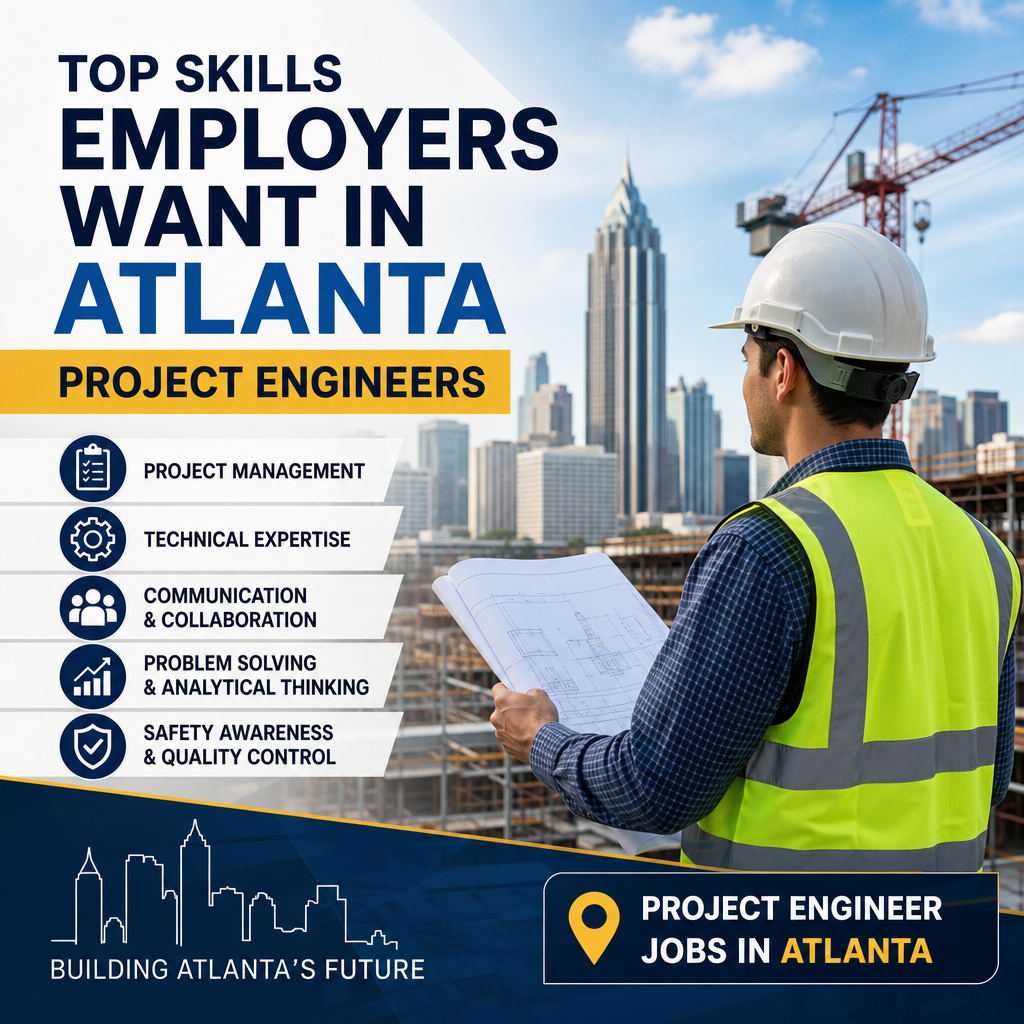
Top Skills Employers Want in Atlanta Project Engineers
Top Skills Employers Want in Project Engineers Across Atlanta’s Construction Market
Atlanta’s construction market is busy, competitive, and constantly evolving. From commercial towers and mixed-use developments to infrastructure upgrades and industrial builds, employers need project engineers who can keep complex jobs moving forward. If you are exploring project engineer jobs in Atlanta, it helps to know which skills hiring managers value most.
Project engineers sit at the center of a construction project. They coordinate schedules, manage documentation, communicate with subcontractors, and help solve problems before they turn into delays. In a market as fast-paced as Atlanta, the strongest candidates bring more than technical knowledge. They combine organization, communication, and field awareness with the ability to adapt quickly.
Why Project Engineers Matter in Atlanta Construction
Atlanta continues to attract major development across healthcare, logistics, residential, and commercial sectors. That means project engineers must be ready to support a wide range of project types and delivery methods.

Employers want people who can help keep timelines on track, maintain quality, and reduce costly mistakes. The role often bridges the gap between office planning and field execution, so a project engineer must understand both sides of the job.
Core Responsibilities on the Job
A project engineer may be expected to:
- Review drawings and specifications
- Track submittals and RFIs
- Support scheduling and procurement
- Coordinate with superintendents and subcontractors
- Monitor project documentation
- Help manage budgets and change orders
- Assist with closeout and turnover
Because these tasks touch nearly every part of the project, employers look for candidates who can stay organized and communicate clearly under pressure.
1. Strong Communication Skills
Communication is one of the most important skills employers want in project engineers across Atlanta’s construction market. These professionals interact with field teams, project managers, vendors, architects, and clients. Miscommunication can lead to delays, errors, and budget issues.
Strong communicators know how to:
- Ask the right questions
- Share updates clearly
- Document decisions accurately
- Resolve issues without unnecessary conflict
They also know when to escalate a problem and when to handle it directly. In a busy construction environment, clear communication keeps everyone aligned.
2. Organization and Attention to Detail
Construction projects involve a large volume of information. Plans, permits, submittals, schedules, meeting notes, and change orders all need to be tracked carefully. That is why organization is a top priority for employers.
A detail-oriented project engineer helps prevent missing information from becoming a major problem. Even small mistakes in documentation or coordination can affect the jobsite.
Good organizational habits include:
- Keeping files and logs updated
- Tracking deadlines consistently
- Reviewing documents for accuracy
- Following up on open items
- Maintaining clean records for the project team
Employers value candidates who can manage multiple tasks without losing track of the details.
3. Construction Software Proficiency
Technology plays a bigger role in construction than ever before. Project engineers are often expected to use software for scheduling, collaboration, document control, and reporting.
Common tools may include:
- Procore
- Bluebeam
- Primavera P6
- Microsoft Project
- Excel
- AutoCAD or Revit for basic plan review
You do not need to be a software expert in every platform, but you should be comfortable learning new tools quickly. Employers in Atlanta appreciate candidates who can adapt to the systems their teams already use.
4. Problem-Solving Ability
Construction rarely goes exactly as planned. Material delays, weather, design changes, and coordination issues are all part of the job. Employers want project engineers who can think critically and help find practical solutions.
Strong problem-solvers stay calm when issues arise. They gather information, evaluate options, and work with the team to keep progress moving. This skill is especially valuable in Atlanta, where project schedules are often tight and deadlines are non-negotiable.
A good project engineer does not just identify problems. They help move toward solutions.
5. Knowledge of Construction Processes
Technical knowledge matters. Employers look for project engineers who understand how construction projects actually work in the field. That includes sequencing, trade coordination, safety awareness, and quality control.
A solid understanding of construction processes helps project engineers communicate more effectively with superintendents and subcontractors. It also makes it easier to spot issues early and support better decision-making.
This knowledge can come from:
- A degree in construction management, engineering, or a related field
- Internships or co-op experience
- Field experience on active jobsites
- Hands-on exposure to estimating, scheduling, or project coordination
In Atlanta’s market, practical experience often carries as much weight as classroom learning.
6. Teamwork and Professionalism
Construction is a team effort. Employers want project engineers who can work well with others, take direction, and contribute to a positive project environment. Professionalism matters just as much as technical skill.
That means showing up prepared, meeting deadlines, and treating coworkers and trade partners with respect. It also means staying flexible when project needs change.
Project engineers who are dependable and easy to work with often become trusted members of the team quickly.
7. Adaptability in a Fast-Moving Market
Atlanta’s construction market changes quickly. Different project types, new technologies, and shifting client expectations require professionals who can adapt. Employers want project engineers who are comfortable learning on the job and adjusting to changing conditions.
Adaptable candidates are willing to:
- Take on new responsibilities
- Learn different project delivery methods
- Work across office and field environments
- Adjust priorities when schedules shift
This flexibility is especially valuable on fast-moving jobs where quick decisions can make a big difference.
Building a Stronger Career in Atlanta
If you are pursuing project engineer jobs in Atlanta, the strongest path forward is to develop both technical and interpersonal skills. Employers want candidates who can support the project team, protect the schedule, and help keep work organized from start to finish.
By strengthening communication, organization, software fluency, and field knowledge, you can stand out in a crowded hiring market. In Atlanta’s construction industry, those skills do more than help you get hired. They help you build a long-term career.